

One lazy Sunday morning, about ten people found themselves walking through the streets of the walled city of Jaipur. It was an eclectic mix of some teenagers, professionals in age groups ranging from 30s to 50s. Some held very serious looking cameras while the others were clicking pictures with their mobile phones. It was the second and the final day of the visual story telling workshop which was being conducted by Tabeenah Anjum Qureshi, a seasoned journalist and photographer with Outlook India. Though the older people tried to play it cool, they couldn’t help getting infected by the raw enthusiasm of the teenagers who kept clicking with their phones and cameras. The resulting photographs revealed unseen but beautiful facets of Jaipur, those which could only be discovered by an untrained eye.
Category: #livinghistory
-

Dapu Khan- The living legend of Kamiacha

Amidst the sea of sand- Dapu Khan- a Merasi musician, who is also an exponent of Kamiacha, one of the oldest bowed instruments of the world- carries a 1500 year-old legacy in his powerful and soulful music.
His rustic voice creates a mental picture of the endless dunes that play with the winds in the desert of Rajasthan. He sings of Kabir, of finding long-lost love and love stories that are still alive in the sun-kissed sands. His name is Dapu Khan, a Merasi musician who is also an exponent of Kamiacha, one of the oldest bowed instruments of the world.
Dapu Khan, who lives in the village Bhadli near Jaisalmer had come to Jaipur as a part of the ongoing Rajasthan Kabir Yatra which travels across Sikar, Jhunjhunu and Jaisalmer regions. The audience in the amphitheatre at the Jawahar Kala Kendra welcomed Dapu Khan with a thunderous applause and whistles that spoke of the musician’s popularity amongst all age groups. His soulful renditions of Kabir’s bhajans entranced every one present and they all kept nodding their heads and clapping their hands to the beat.
Despite his popularity, Dapu Khan’s simplicity reminded me of bhajans that he had just sung. Here are some excerpts from the tete-e-tat:
Since when have you been singing Kabir’s bhajans?
Kabir’s bhajans are very old and I have been singing at least eight of his bhajans since a very long time.
Why is Kabir so popular even today?
Kabir’s works speak of the world, he speaks of selfless action, he does not criticise anyone nor does he praise anyone. He is only connected with the supreme power. He tells people that you shall only reap what you sow. He talks about cleansing one’s own mind and heart and keeping the five senses in check. ‘Kabir Kabir kya kare, socho aap sharir, panch indriyan vash karo, aphi das Kabir.’ (Why do you keep calling out to Kabir, control your five senses and you will also become like Kabir).
What attracts today’s youth to Kabir?
People who have started knowing Kabir through music or through teachers or hermits are drawn to Kabir’s works because of their simplicity and the eternal truth that they speak.
What is your experience with Kabir Yatra?
This is the first time I have been associated with Kabir Yatra and so far its been a good experience.
What is your take on the today’s audience for the ancient Indian arts like yours?
Indian tourists and Indian people visiting India from abroad value these arts more than people who live here. The ones who come visit from other countries like to hear these songs and even record them and take them back with them.
What else do you do besides playing music and singing?
I have old books of all religions and great writers. I read them whenever I get time. I also help people to find their lost things by smelling and calculating the names and numbers of people they are associated with. I also calculate the day and the month and season too matters. This is a calculation which has been passed through word of mouth from our ancestors.

Dapu Khan’s life seems to be a reflection of the Sufi Bhajans that he sings. He is an ardent believer of the goddess Karni of Deshnokh and has named his sons after her. He sings his songs with an abandon that matches that of the well-known saints. This unassuming man is one of the few exponents of Kamiacha, an instrument created out of a single piece of wood, and has not been changed since the last 500 years.
The burgeoning crowd at the Rajasthan Kabir Festival is a clear indication of the fact that Indian audience still enjoys listening to musicians like Dapu Khan. However, unlike the Bollywood movies or other forms of popular art that are publicised days in advance, there seems to be a dearth of publicity when it comes to these festivals. The lack of space seems to be another problem that plagues such events. The amphitheatre at the Jawahar Kala Kendra was almost full but people still found place to sit on the grass and on the steps. Today, our folk artists and their artforms need a new rendezvous with the youth who enjoy them when they get a chance. The atmosphere is created, all we need is to spread the word and create some space in our halls and hearts.
Shailaza Singh
Published Author, Poet and Musician
This article was published in Rashtradoot’s newspaper’s Arbit section on October 4, 2019
-
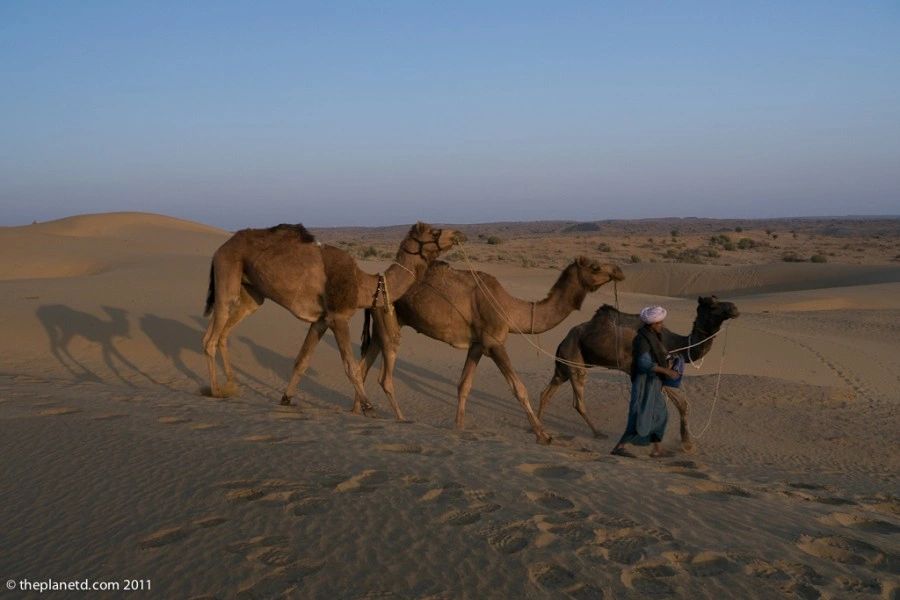
The lost treasure
The partition was not an easy affair for anyone. People were killed, murdered and those who survived and crossed over were constantly haunted by the memories of the home and the people they had left behind.

My great grandfather’s stories of partition exodus had always fascinated us. The lazy Sunday afternoons were spent sprawled near his armchair listening to the stories with open-mouthed fascination while he reminisced about the painful affair. He poignantly described those agonized moments when he had to say goodbye to some of his childhood friends.
During partition, my great grandfather who was known as Brigadier Khem Singh was serving in the Bikaner State Army. He was stationed in Churu district in Rajasthan and it was his job to ensure a smooth transit for those who were setting out for a new life in India’s new neighbor.
‘But, why didn’t you hide them grandpa? You could have hidden them or may be some of your friends somewhere and they could have continued living here.’
‘Don’t be silly. They were all my friends and I couldn’t have hidden some and let some go. It would have been unfair.’
‘So didn’t you call them up or write to them or something?’
‘How could I write to them ? It wasn’t like an army posting. They didn’t know where they were going to be, so there was no address to write to. We also didn’t have any phones at the time.’
He told us about how he could never bring himself to revisit their abandoned mansions because he knew he would experience nothing but their pain and loneliness.
‘When I was a boy, we all used to play together. Manu Khan, Sugandi and many others. It was sad to see to them go. We spent days playing and running around in those mansions and suddenly they were either deserted or someone else came to live in them.’
He barely talked about anything else but the heartrending tales that were an inseparable part of the whole affair. Once or twice he mentioned how people told him about the treasure that they had buried in the sand so that they or their children could come and claim it once the political environment improved.
However, as children, we were more interested in the treasures left behind by those who were leaving their ancestral homes and going towards an unknown future. We often made him repeat the parts where people buried their treasure in the desert sands and told him to keep a watch on it till they came back for their precious heirlooms.
‘But Grandpa, what was in the treasure and why did they bury it?’ we would constantly ask.
‘Oh, nothing much, just some gold bricks and jewelry which they could not carry. They buried it because the riots had started and news had spread of people killing each other ‘, he would reply.
‘Did you see them?’ How big were the bricks?’
‘No, they just told me that they had buried the treasure near this sand dune or that tree and I just told them not to worry.’
‘So you never actually saw it?’
‘No, I didn’t. I couldn’t have gone and seen everything. Many people had buried their treasure in the desert . I was taking care of lakhs of people. I couldn’t have seen everything.’
‘But then they wanted you to look after their treasure, that’s why they told you, didn’t they?
‘No, they just told me because they wanted to tell someone they trusted. The treasure was buried in the desert and the desert would look after it.’
‘How would the desert look after it?’
‘The desert is wise. It hides many secrets in its depths and reveals only those which need to be revealed.’
‘So, where is it now?’
‘I don’t know, probably somewhere in the desert. ‘
‘Did anyone come to claim their treasure?’
‘No, I hoped they would come so that we could meet and talk. But no one ever came back.’
‘But had they come back, would they be able to find their treasure?’
‘Probably not. The dunes keep shifting.’
We would don our thinking caps, just like our favorite detective Sherlock Holmes and try to pin point the exact location of the buried treasure on a small map of Rajasthan. For us that treasure represented the proverbial pot of gold at the end of the rainbow, which would end all our problems and help us to live life king-size. We would analyze every word uttered by grandpa and try to deduce the exact bearings but the exercise was usually a frustrating one and we would end up more confused than ever. We tried to ask the others members of the family, who would shake their heads and tell us to ask grandpa.
‘Please tell us grandpa where exactly was the treasure buried?’
‘Which treasure?’
‘The one you were talking about. The gold bricks and the jewelry left by your friends.’
‘I told you I don’t know. They buried it in the desert and that’s all I know.’
‘Grandpa, we can look for it and probably we can find it. We can even give it back to them.’
‘You children are crazy. I don’t know where it is and I cannot tell you anything else. Now go and let me sleep.’
We, the children would try our best to cajole him to tell us about the location of the treasure but to no avail. My grandfather was never interested in money or the luxuries that came with it. He believed that money was just needed to feed the family and ensure that they could live a decent life. The trappings of the rich were not his idea of a good life. For him, his treasures were his friends and the time he spent with them and no amount of gold bricks could bring that back.
Shailaza Singh
Published Author, Poet and Youtuber
This article was published in Rahstradoot’s Arbit Section in September 2015
-
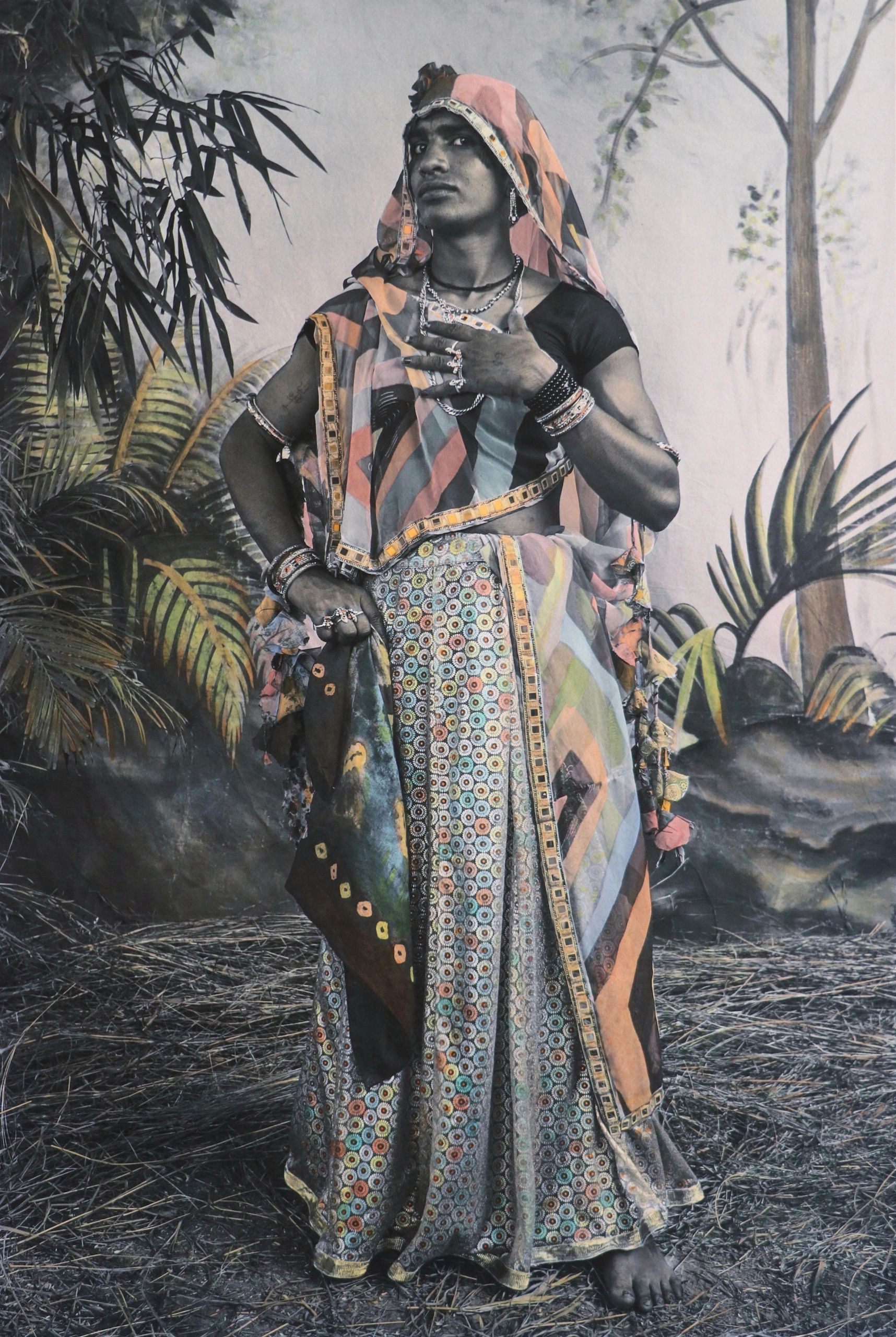
A dance of faith, culture and Gauri

Gauri or Gavri dance as it is popularly known is a forty-day festival observed by the tribal communities of Mewar where men dress up as various characters including women to appease the Gods.
I entered the non-descript room which was located in a corner of the Maharaja Sawai Man Singh (MSMS) II Museum in the City Palace. I saw about fifty men and women sitting in the room. I also saw two foreign looking men (who I later discovered were the American photographer Waswo X. Waswo and Giles Tilloston, consultant director, research exhibitions, MSMSII Museum) and a Sonika Soni, a art historian sitting in the front of the room. The topic of discussion was Waswo X. Waswo’s recently released book ‘Gauri Dancers’ by Mapin Publishing while a slide show which displayed some pages of book played in the back ground. Waswo has been living in Udaipur in Rajasthan for the past twelve years where he collaborates with the local artists to create sepia-coloured pictures along with the photo-hand colourist Rajesh Soni.
Waswo talked about how he was introduced to the style of Gauri when he was clicking a picture of a Gauri dancer in 2010 as a part of a regular series. However, it was only in 2011 when he encountered a man selling Gauri masks that he decided to create a book by using the dancers as models and creating appropriate back drops for them. In fact, this book is the only English-language book on the tradition which features the portraits of performers.
I looked at the crowd. Some were busy chatting on their phones while the others were listening to the conversation. I was wondering about what was so interesting about a bunch of sepia-toned, hand-coloured photographs when Waswo started talking about the Gauri or Gavri, the forty-day festival which is celebrated by tribal communities of Mewar, in southern Rajasthan. The celebrations commence on the next day of Rakshabandhan, a period which is interestingly known as the most inauspicious period according to the Hindu calendar because it is believed that the Gods go to sleep after Raksha Bandhan and no auspicious activities including marriages are held during this period. During the forty days, the men from the Bheel, Gameti and Meena communities observe strict fasting and do not eat in the night. They abstain from non-vegetarian food, alcohol and walk barefoot and sleep on the floor. The predominant belief behind this entire ritual is that if they worship Lord Shiva and his wife Goddess Parvati by observing these austerities, then the gods will bless them with ample rain during the rowing season and an abundant crop.

The interesting aspect according to the historian Sonika Soni was that no women take part in these celebrations. Women are an important part of the audience and the welcome group as the performers travel from village to village during these forty days. The performers generally choose the villages where their daughters have been wed and the villagers from these villages host these performers. In these performances, many performers play multiple characters and keep improvising and changing their costume depending on the act. The stories are based on Shiva, his wives Mohini and Parvati and Bhasmasur, the demon. They wear makeshift and locally improvised costumes. Only one character called Rai Bhudiya wears a mask who acts as Shiva and Bhasmasur. The wives of Shiva are Mohini and Parvati. Sonika Soni recounted how men and women from the village seek blessings from the performers as they believe that the performers imbibe the gods during this period.
Waswo narrated an anecdote where he had invited the performers to his make-shift studio in outskirts of Udaipur and told them that he wanted to photograph them in their costume. The performers were so enamoured by the idea that they kept coming back for photographs even when they did a minor change to their costume for the upcoming act. He also talked about a photograph which had several children posing together as ‘monkeys’. He said that the children of the tribal community just stay keep watching the performance and do the odd jobs for the performers. According to him, nothing has ever been documented in this age-old tradition and everything including the acts, stories is word of mouth which has been passed on from generation to generation.
Sonika Soni said that in the recent years, the NGOs from various parts of Rajasthan have started taking an interest in this festival and may be the government will also start doing something for these artists who are endeavouring to preserve an age-old custom. However Waswo had a different take on this and said that as of now the tribal community and the festival has been thriving with the support of the local villages. He said that the intervention from the local authorities should not take away the spirit of the festival and transform it into just a day-long affair for the amusement of the tourists, something like what happened to the Kathakali, the famous dance from Kerala.
For me the photographs from the book were just the icing on the cake. The real deal was the Gauri dance and the dancers who have been keeping this folk tradition alive without any incentive except their faith in their Gods. In a non-descript room of the museum in the City Palace I had a rendezvous with the living and breathing history of Rajasthan, something that has not been relegated to commercial performances, at least not yet.
Shailaza Singh’s article on Gauri Dancers was published in Rashtradoot’s Arbit on November 2, 2019.
You must be logged in to post a comment.