He has been around in the showbiz for a decade, but no one except the dedicated serial watchers really knew who Indresh Malik was. In the last one month, ever since the release of Sanjay Leela Bhansali’s magnum opus Heera Mandi on Netflix, this Arian has suddenly been thrust into the limelight for his unique portrayal of Ustad ji. His Instagram followers have increased from 2500 to 19000 in just a month. Years ago, he had set out from a cozy home in Delhi to the big bad world of films but it is now that Indresh Malik has arrived!
When I first saw Indresh Malik as Ustaad ji in the series Heeramandi, I really didn’t like him much. He seemed like a conniving fellow who was busy instigating the tawaifs against each other for his own interests. However, slowly as the series progressed, Ustaad ji became more human with his own follies. Indresh’s Malik effortless acting of this LGBTQ man made one believe that he was indeed a real person who would have perhaps walked the lanes of the infamous Heera Mandi or the Diamond Market. Until now, no one really knew who Indresh Malik was but Heera Mandi has catapulted this Delhi guy to the dizzy heights of stardom. When I caught up with him for the telephonic interview, he was as candid as a Dilli wala would be. Some excerpts from the conversation:
How did you venture into acting? I was born in Ludhiana, Punjab. My mother is from Delhi. My forefathers were from Rawalpindi and Lahore and migrated to India after the partition. I spent my childhood in Delhi and then later studied in Kirori College Delhi where I also trained in theatre under Kewal Arora and Ibrahim Alkazi. I got married when I was about 20 years. My wife is business woman. My parents decided to get me married early because I used to often be featured in newspapers for my portrayal of various characters in plays in college. Though they were happy about my success in theatre but they didn’t want me to get into acting. My father was a very successful businessman, so we had no dearth of money. Now when I think of it, they probably were right in their own way. They probably thought I didn’t have the required height or the body and acting was such an unsure field at the time. So, one fine day I was introduced to this girl who was a family friend and we got married. Though after marriage, I did not actively pursue theatre but still I was passionate about it. So, in those years, I found different ways to remain involved with theatre. For example, I used to sponsor my college plays. My father had multiple business ventures in the 90s like iron and steel, international call centres. We also used to deal in computer parts. But I didn’t have any interest in these businesses. Though I used to help my father in his business but only half-heartedly. I used to find excuses to stay away from business and used to spend my time doing theatre. Looking back, I really don’t think I had that business acumen. A lot of losses in the business happened because of me. People used to cheat me or run away with my money. My business would fail. Then I used to go to my father and he used to start another venture for me. He was adamant that he would make me a very successful business man. My wife, Leena Malik on the other hand has been a very successful business woman. She used to work in her father’s firm which used to export leather to Russia and Europe. After marriage, I became a dad in a year and got involved in my child. Slowly my business also started booming. However, I didn’t have that shrewdness that is required of a business man. My heart was always elsewhere. Then, I found another outlet for my creativity. I started designing clothes and got my first order from the well-known designer Rohit Bal. Though I didn’t have any formal education in design but from my childhood, I have loved playing with fabrics and designs because I have an innate knack of understanding them. After my father’s passing, my wife and my brother helmed the business. My wife encouraged me to pursue my passion. Though I call her Simran after marriage, it was she who said the famous dialogue from DDLJ, ‘Ja Simran ja, jeele apni zindagi! In 2012, I got a call from my college mates Seema and Sudhir who were heading a company called Sunshine Productions. They told me that they wanted me to do a role which would just require five-six days of shooting in Delhi for a series called Karol Bagh. Since it was in Delhi, I agreed. But then my character was liked so much by the viewers that my role lasted for about 2 years and I got nominated and even won many awards for it. Then I bagged another daily soap which required me to shoot in Mumbai. So, for about 1.5 years, I used to travel from Delhi to Mumbai almost every day and shoot both these serials simultaneously. With time, I got more assignments and I had to shift my base to Mumbai. But my entire family including my mother, my brother and his wife weren’t very happy about it because they felt that I was leaving an established business. It was difficult for me too because I come from a joint family and by then I had already had my second son and I too wasn’t happy about leaving my entire family back in Delhi. It was almost like uprooting my entire existence from Delhi to Mumbai. The only consolation was that I didn’t have to struggle in showbiz as I was already a household name because of my serials. When I came to Mumbai, the rickshaw also didn’t take any money from me because he was a follower of my serial. Soon, I got more work and within a year I got my wife and children here in Mumbai.
Indresh Malik with Farida Jalal
How do you get into a psyche of a character? Tell us about your character Ustaad ji? Half of the work is done if you are given the right briefing. I got a call for audition for this character of Ustaad ji. So, my first few questions are who is the character, what is the age, where is the character from, what kind of language does the character speak, what does he do, is he grey or positive or negative. So if you know all these things about the character, you get a framework in your mind. I like most actors am a very acute observer of people. When I go out and talk to people, I am always noticing the little nuances about people, like the way they speak, their pauses, their hold with their language, their listening power and patience, how they walk, how they eat. There was a time I used to stare at strangers. I remember during the wedding season in Delhi, where the newly wedded couples used to come to the Gurudwara to pray, I used to keep watching these couples. My folks used to scold me for staring. It was like even if someone is crying, instead of pacifying the person, I would be observing how this particular person was crying. My friends used to admonish me and even tell me that I would get beaten up some day for staring like this. For my role as Ustaad ji in Heera Mandi, I already knew Urdu since my father and mother’s family had migrated from Lahore and Rawalpindi in Pakistan. So I was well versed with the pronunciations and the little nuances of the language. My grandmother was a retired principal who had worked in Lahore. Playing Ustaad ji was interesting because it was a multilayered character and not just a LGBTQ character. Though he had shades of grey and was a conniving person but he also had a warm, human side to him. He had probably faced a lot physical and mental exploitation because of which he had a very vengeful attitude. In the world, not every one gets everything as they say ‘kissi ko mukamal jahan nahin milta.’ So the poor soul is searching for his mukamal jahan!
Indresh Malik with his sons and wife
Is playing such complex characters emotionally taxing? Yes. I am a very happy-go-lucky person. But let’s say I go for work and I am asked to do a scene where I have to cry my heart out. So, I have to force my mind to come to that level. In the series I had a scene with Sonakshi Sinha where I had to cry and it so happened that even after the director Sanjay Leela Bhansali said ‘cut’ and the shot was over, I still kept crying. The director hugged me and even gave me 500 rupees note as a token of appreciation. But my crying didn’t stop even then. It was almost like I had gone to someplace else in that state.
What do you like doing in your free time? I like writing poetry. I talk to the fruits and vegetables. I like gardening. I love delving in astrology. What’s the best piece of advice that you have been given ever? My father used to always tell me not keep an elephant because if I lose the elephant, I would lose everything but to keep many small goats because even if I lose a couple of goats, I would still have the remaining goats with me. Basically, he wanted to say that make small investments instead of putting everything on one investment. Why are more and more men playing female characters or third gender? Is it a sign of growing empathy towards women? I think it is just a trend. Why would women need empathy? I think women are more powerful than men. I don’t understand why people forget that because every man is born from a woman in the first place.
This article by Shailaza Singh appeared in Rashtradoot Newspaper’s Arbit Section on Friday, May 31, 2024
Malashri Lal’s poems from her book “Mandalas of Time” are like a string of pearls. Each distinct and yet each one is a part of narrative that speaks of the experiences, perspectives and the emotions of the poet. Malashri says that when she writes, her poems flow on their own.
Malashri Lal’s childhood was a riot of different cultures. Her experiences in Jaipur’s Parda clad world were starkly different from those in Shanti Niketan where music and art were made to flow freely for everybody. But such contrasting worlds have only helped shape and enhance her poems and her perspective. In this candid chat, she talks about her connection with Tagore and more.
What is your connection with Rabindranath Tagore? My father’s side of the family is from Shanti Niketan and some what linked to Tagore. My mother’s side of the family is from Kolkata, they are very urban people. My father’s uncle, Prabhat Kumar Mukherjee was a very well-known scholar. He was Tagore’s disciple and official biographer. Much of the Mukherjee clan had settled in Shanti Niketan right from the time Shanti Niketan had been set up. They had rows of plots in one particular area of Shanti Niketan. My uncle was very fond of my father and had kept aside a plot for him. He wanted him to relocate to Shanti Niketan after retirement. However, my mother flatly refused as she was a total urbanite who loved parties and beautiful clothes jewellery, fun and games, travel. She certainly enjoyed the good life. My father on the other hand was this scholarly, serious man who was nicknamed ‘the walking encyclopaedia’ who just knew everything. It is believed that children are a combination of their parents. How much of your father and mother are you? I think I am a bit of both. Like my father, I was a good student and I continue to keep my reading and writing as my principal occupation. I have written about 21 books. I enjoy studying for the sake of studying and not because some one will give me something for studying. Like my mother, I thoroughly enjoy a good get together and party. What were your growing up beliefs? We are Bramho Samajis which is mostly a reformist Hindu Samaj. It believes in women’s liberation, education, equality. So we grew up with a very liberal environment at home which was deeply rooted in culture but also great respect for all other cultures, religions and places. I have a very homogeneous bunch of friends who come from different backgrounds. Where do your poems come from? A lot of my poems come from this fragmented identity that I have. At one time I used to worry about it because if anyone asked me where was I from, I never had an answer. People would say, they are from Rewari or Ajmer or Udaipur but I never had an answer because I couldn’t honestly say that I was from Jaipur. I was in Jaipur because my father was in Jaipur. I couldn’t say Kolkata or Shanti Niketan because I had never lived or studied there. So, I would say I am from India. But Delhi helped me a lot. It was in Delhi that I realized that every body was from somewhere else. I started feeling far more comfortable in Delhi because there no one would say the kind of things or answers that I would get in Jaipur. If someone would ask a person from Delhi about where they were from, they would reply without a qualm that their grandfather was from Pakistan but then they shifted to Amritsar and now they are settled in Delhi. So, it was in Delhi that I developed a multiple identity like the people there. But my poems are a lot about this fragmented identity, so somewhere I talked about the Poshak worn by Rajasthanis and the ‘than’ worn by the Bengali widows. When did you start writing poems? I started writing poems from the age of 12. I used to write them in the back pages of my notebooks and never showed it to anyone. I wrote poetry for years and this is my first collection of poetry which has come out just when I am 74 years old. I have learnt that it is never too late to begin. Slowly I started showing some of my poetry to my friends who were amazed with it and wanted me to publish them. Then something happened during COVID, when I started collecting my poems which were written all over the place, on napkins, pieces of paper, back pages of the books. When I put them together, I realized I had over a hundred. I showed it to a young friend of mine whose judgement I trust. She wrote back to me and urged me to publish them because they had such a lot of values in them. She made me see things that I had not seen in my own poetry. I chose 75 of those poems for publishing. What made you write this poem “Crushed”? This was a very brief poem. I had written it for a friend in America who is a painter and a writer. She was doing a digital exhibition and needed very short poems. So, I sent her this poem which was mostly about how young women are supposed to be. //Crushed “Words crushed into silence Lips sealed against utterance Eyes hooded guardedly Body cringing into wrinkled tightness Is this what elders called ‘Maidenly virtue’?”//
You have also written another poem “Escape” on similar lines. We were the first generation of women who actually started working outside home. Our mothers were homemakers, not that I look down upon the home makers but our generation was the first were women who were going out of the house. So, there were assumptions that the women had to not only work outside the home but also tend to the kids and take care of the house hold too. In our generation, there were two sides of a working woman’s life. One was the excitement of earning your own money and doing whatever you wanted to do with it and the other side was also the challenge of doing a professional job with respect and dignity. So, in a way it was an escape from domesticity and all the assumptions that went with it. At another level, it came it with its own demands. So, I don’t have an answer to why or when that kind of an attitude changed but I do know that in our generation (I am talking of the generation that came into teaching in the 70s- 80s in Delhi University) there was a certain assumption that the women can only do this much and many of us were fighting that assumption at a cost to ourselves no doubt. Whatever it was, it also meant educating the men. Many of the men were perfectly unaware, nobody had bothered to explain these things to them. I thank my stars that I was very lucky in this regard. I had an extremely supportive husband and very understanding parents and in laws.
//Escape “The toxic air of a false home Turns oppressive again and again In about four weeks; Unseasonal yet so predictable So much of a pattern. She runs away, yet hardly moves, Packs and leaves her home The sorrow of neglect lodged in a dark room Struck dumb by the quiet controlling powers. Then she returns Unlocks the suitcase while shutting her heart Sends clothes to the laundry Lifts the empty case to the upper shelf Her soul secretly yearning For the next great escape.”/
What made you write Bougainvillea? Is this poem also about migrants? No, Bougainvillea is a metaphor for colonial control over India. When I wrote it, I didn’t imagine it would get so much of attention. I wrote it because I used to see bougainvillea all over the place. Of course, I am interested in flowers and trees. When I looked more at the bougainvillea, I realised it was an imported plant. How did it spread so much? When I wrote the poem, I didn’t consciously create it as a poem about colonialism but that is what it became. It often happens with most poems. When I write a poem, I am not intending to writing it in certain way or suggest a certain thing but it just flows. The ending of the poem “A traveller who landed, on our shores and conquered it with careless abundance,” is not just true of the bougainvillea but is also true of the British. The colonial rule suppressed a lot of our local culture, belief and practices.
//Bougainvillea “Bougainvillea cascades in parks, shops, homes, Metro, fences, Clawing, creeping, clinging To surfaces Crushing them under a weight of thorns. Disguised as flowers The Bougainvillea is a migrant tree, blossom and thorn That took root in our land And spread its deception Of beauty. The barb is hidden The leaves play with colour Branches spread wantonly Our land is host to this migrant And its imperious authority, The gentle chameli vine is shattered The harsingar is pushed to the corner I gape at the invincible Bougainvillea A traveller who landed On our shores and conquered it with careless abundance.”//
To be continued..
This article by Shailaza Singh appeared in Rashtradoot Newspaper’s Arbit Section on Friday 26 April 2024.
In most people, a passion such as this lasts for a few months or may be some years. After that, it fizzles out as daily problems and needs take their toll. However, that has not been the case with Pradeep Sharma Khusro. In the past 20 years, his passion and love for Khusro has only increased which he feels is nothing short of a miracle.
Pradeep Sharma Khusro
“I feel as if the passion that I have for Amir Khusro is actually a miracle because my life has been full of problems especially the financial ones. Despite this, this passion has been increased. Actually, I was never career oriented. It was as if I was hypnotized for this, as if my entire thought was for this passion. There is a price to be paid for everything. I have lost a lot of things. Today, still I am jobless. Had I not concentrated on Amir Khusro, I would have probably had a flourishing career. I have done my Bachelor’s in Fine Arts and Bachelor’s in Education. I started out as a cartoonist. I taught in schools after B.Ed. I kept taking exams so that I could work as a drawing teacher in government schools. However, since I was from the general category, I had no quota to support me despite a very good percentage in B.Ed. So, people who could use the quota got the job despite a low percentage. This made me realize that there is no value for good marks or talent in this country.
Collecting treasures According to Pradeep, he has the biggest collection of works of Khusro in the world. However, he is still looking for more! “When I first started to collect works on Khusro, I could only find a few books. I talked to collectors and many such people. I also contacted antique dealers who deal in books and furniture. Each book that I purchased was of 20,000 INR which will be perhaps a lot more valued in the international market. Many scholars at the end of their days gifted me their collection of books since they knew that those books might be thrown out after their death. I made friends with students from different countries like Afghanistan, Iraq, Tajikistan etc and they helped me to procure books. I may not be the richest man in the world but I have the largest collection on Amir Khusro in the world. I have around 3000 books on 12 languages from 14 countries on Amir Khusro in Persian, English, Arabic, Urdu, Turkish, Hindi, Marathi, Bengali, Multani, Punjabi, Uzbek and many more. I have about 300 audio cassettes, DVDs, CDs and audio cassettes. He wrote a lot of books in Persian and even Hindi. However, you don’t get many of his books written in Hindi language except for Khalik Bahari. He wrote a book on Krishna titled Halaat-e-Kanhaiya but I haven’t been able to procure that book till now despite all my efforts. I have a book by him titled Chehel Roza which not many people can lay their hands on.” “The interesting thing is Amir Khusro is perhaps one of the few Indians who is taught in most universities of the world in many of their departments like music, history, philosophy, Sufism etc.” However he feels that the politicians in India are not interested in anything unless it impacts their vote bank. “I have met most ministers of all the governments in India. One thing I have understood is that none of them are interested in anything except vote bank. If promoting Amir Khusro could help them to get votes, they would become the long-lost relatives of Khusro otherwise they couldn’t care less. Regardless of their culture or religion, the only god they worship is vote bank. They don’t ask how will something benefit the country; all they ask is how it will benefit them.”
Why Khusro? Pradeep feels that his passion is a part of something bigger. He has no logic why he likes Khusro so much but believes that his passion which is nothing but love has a life of its own. “I have been able to sustain this passion because perhaps the universe wanted me to sustain it. Everywhere I go, whatever I do, I am only thinking about Khusro. My name is Pradeep Sharma Khusro because I believe I have some connection with Khusro. I did not consciously develop this passion. The circumstances, the people I met helped me to progress on this path. I didn’t pursue this with any thoughts of gain or loss. It is what Meerabai felt for Krishna. She did not think of anything else but Krishna. I feel it is a form of divine love for God.” Why are people like Lord Ram or Subhash Chandra Bose or Ram Krishna Paramhans or such people remembered even decades or years or centuries after they are gone? Why do we study about them in our books? Simply because, they came with a mission and a purpose in life. They lived for their mission and even died for it. My mission is about Khusro. Maybe years after I am gone, people will read my books and say that here is man who explored Khusro in a way that no one could dream of. A genius unrecognized Pradeep feels that a genius like Khusro should be a part of every syllabus in India. “A genius like Amir Khusro never got his due in his own country. He was not only a poet but also a writer, musician, singer, vocalist, astrologer, military commander and astronomer. After his death, for centuries no one really bothered to compile his work. The rulers became commercial and selfish and did not bother about preserving such works. Non-political people especially professors of India and Pakistan helped in consolidating his works. It was only in the 15th century that people started recognizing and consolidating his works in Iraq since the emperor of Iraq, Sultan Hussain Bayqara loved Amir Khusro’s work. He asked his court poet to check the royal treasury and count the books that they had on the poet. The court poet checked and said they don’t have much except 4-5 books. He ordered him to travel the world and consolidate all the books and works of Amir Khusro and bring them back. After 5-6 years, when the court poet returned, the emperor was ecstatic. However, when a Sufi mystic from Afghanistan asked him if had certain ghazals written by the poet, he couldn’t find them! So, he again commissioned an expedition around the world for Khusro’s work. The ensuing collection is the world’s biggest on Amir Khusro and is housed in St. Petersburg library in Moscow. Most of the works are from India but we can never get it back unless our government is interested in procuring it.”
Spirit Talks Pradeep says that his dream conversations have not been just about the works of Khusro but helped him to gain insight about the life beyond death. “The people I talk to in my dreams are Hazrat Nizamuddin Auliya and Amir Khusro. They told me they had died in 1300s. They said that after they died, they had expected to meet their ‘Allah’ but all they found was a bright divine light which they couldn’t face. They said that this universe is actually made by light. In Sufism, there is only one power which runs the world. They said that this power loves play. It likes change and hence it creates everything in the world for its amusement.” The Road Ahead Pradeep feels he still has a long way to go on this path. “I am compiling the Hindi works of Amir Khusro. I am perhaps the only person in the world who has personally commissioned the translation of more than 5000 pages of Amir Khusro’s Persian works. I used the money I earned in the Aga Khan Foundation. I have been talking to my friends in Pakistan almost on a daily basis and they keep sending me Khusro’s works on email or WhatsApp because they share my passion about Khusro.” I am also researching on Khusro as a historian, a philosopher, as a Persian poet and Sufi mystic. As a historian, he not only wrote about the prevalent political scenario but also about the cultural aspects too. He extensively wrote about the animals, food, clothes, languages, religion, ethnicities in his era. He talked about the samosas and the masalas that were used in them and the kind of influences that were present in the Indian food. He also wrote about the makeup used by women, the festivals, the rituals followed in both rich and poor societies. As a musician, he contributed a lot to Hindustani music. There are many anecdotes of Amir Khusro which people are not aware of. I am writing about those too. He was a multi-faceted personality who was an astrologer and astronomer too. People say that no other poet has written so extensively. He has books that have 800-1000 pages each. I feel I am similar in that way because when I start writing from the morning, I continue it for 18 hours at a stretch. Infact, now I have started writing lyrics for Bollywood movies in the style of Khusro. I composed my first song in 2018 for a film titled ‘Angrezi Mein Kehte Hain’ which was directed by Harish Vyas and produced by Manav Malhotra, Bunty Khan and NFDC (National Film Development Corporation of India)”
This article by Shailaza Singh was published in Rashtradoot Newspaper’s Arbit Section on 13 June 2021.
The online dating apps have proved to be a life saver for the trapped or even unattached Indian men (and even women) who are looking for a ‘little bit of fun’. These apps promise them an exciting world full of beauty, adventure and anonymity from the comfort of their computers!
The phone is a convenient tool for people who seek love online
In the movie, ‘Yeh Jawani Hai Deewani’, Ranbir Kapoor says, ‘ Shaadi is dal chawal for pachaas saal till you die. Arre life mein thoda bahut keema pav, tangdi kabab, hakka noodle bhi hona chahiye na?’ (Shaadi is rice and lentils for the next fifty years till you die. One should have a bit of keema pav, kebab, hakka noodles too, isn’t it?) This sentiment has been echoed time and again in most Hindi movies, where the poor husband has no choice but to listen to his wife for the rest of his life. It doesn’t matter whether it is an arranged marriage or the one done out of love. The husband cannot help but be tormented by his ever present wife. In movies like Pati, Patni Aur Woh, Sanjeev Kumar loves his wife Vidya Sinha but later falls for Ranjeeta who is obviously more beautiful and desirable. From then till now, countless movies like Biwi No.1 and many more have depicted the adventures of husbands who are fed up with dal chawal and go out to seek more in the world. More often than not they are caught in the end or suffer a heartbreak by the other woman and apologize the wife. But does it really impact their appetite or quest for variety? The advent of apps like Tinder, Aisle, Truly Madly has probably come as an answer to the collective prayers of those poor Indian men who have been desperately looking for some kind of distraction or fun on the side which can spice up their mundane existence. Not all men on these apps are married, some of them are looking for partners because they have been divorced or widowed or were never married in the first place. But then, we all know dating is not as easy as it sounds. It is a game which has been played between men and women for centuries. Earlier, the women played coy, made the men chase them, woo them or even invest in them. Most of these games haven’t changed- they have just been transferred into the online world.
Dating Games
The online world is an interesting place. You can see a man or a woman sitting on the bed or the couch engrossed in their phones, perhaps with a slight smile or a frown on their face and you would not suspect a thing! You wouldn’t know if the man is trying to woo a woman or doing his office work. This is particularly the case of the poor unsuspecting wife in the lockdown who thinks that her oh-so-sincere husband is working from home to ensure that the money flow is not interrupted. She does not question him because he is there right in front of her eyes, looking perfectly innocent! When he gets a phone call, he steps out for hours because he tells her that the background noises in the house tend to disturb his conversations. She agrees and lets him go. After all, what can he do amidst the prying eyes of the neighbours? He is only talking to people in his office! Isn’t he? Sumit, 41 has been working from home since last year. Initially, he found it quite boring because there was nothing else to do except work. He could not gossip with his colleagues or have lunch outside the office. He says, ‘In our office, there are a lot of beautiful young girls who work as interns. It is so refreshing to see a pretty face, the first thing in the morning.’ However, with the lockdown, things changed. Now all he saw was his wife, children and old parents. Meeting friends was fraught with dangers lest he gets COVID. He was at his wit’s end with boredom till he chanced upon a Tinder ad on the net. He logged in and hasn’t been able to log out till date. He says, ‘Life has definitely become more interesting. I cannot meet the girl physically but then apart from that there is nothing we cannot do. There are so many girls I have connected with. Some are intelligent, others are good looking- I am spoilt for choices and my wife does not have to know! She knows I am working hard to make the ends meet. Talking to these girls is like a breath of fresh air and I am hurting no one!’ There are many such men, married and not married. who have found breather from their mundane existence through these dating apps. Joseph 38 has been separated from his wife for the last 8 years. He is not officially divorced as a result of the family. He has been on Tinder for the last 3 years. ‘As a man, there are times I crave for physical intimacy. However, I am not ready for any kind of commitment. Apps like Tinder have people who look for a similar ‘no strings attached’ arrangement which was an ideal situation for me.’ So, how has he been faring after COVID? ‘These days, I have gotten into the online mode where I can talk to the person through video or audio or skype. We can delve into all kinds of talks including the intimate ones and that helps me to cope with my loneliness.’ Satish Kumar, 41, divorcee, and an entrepreneur from Hyderabad, who is at the moment stuck in Vijayawada, Andhra Pradesh says, ‘Dating apps are a huge respite for a person like me who is stuck here in the pandemic. I had come to see off my parents who were going to visit my sister in USA. As a result of the lockdown, I couldn’t travel back to my place. I pass my time by chatting with people, especially women from different walks of life.’
The Con Game
So, how has his experience been on these dating apps? Satish says, ‘I am primarily on Tinder and Aisle. Tinder has an advantage that you can connect with people all over the world. I have many friends in different parts of the world whom I can talk to. However, Tinder has a lot of men and women who are nothing but con artists who seek gullible people to extort money. I befriended a divorcee on Tinder. Since I too am looking for a long-term relationship and eventually marriage, I found her good to talk to and we connected well. After a few weeks, she told me that she needed money for her eight-year-old daughter’s treatment. Since, I am myself a father, I could identify with her pain and sent her the money within no time. The next day she had blocked me and all my attempts to contact her failed.’ However, these con games are not just played with men alone. Gullible women are also entrapped by men on these dating sites. Gayatri, a divorcee and an architect from Coimbatore was duped by Prateek who told her that he was short of cash for his mother’s treatment. They had met some months back and Gayatri liked him. ‘I thought he was such a dutiful son to his mother. I talked to his mother on the video call and she seemed like a nice lady. She told me that she had been looking for a daughter-in-law like me who would be a good wife for her son.’ Prateek even came to meet her a couple of times. ‘He seemed to be a decent guy and I thought he was genuinely interested in me. He wasn’t looking for physical intimacy at the moment he said; he was only looking for a long-term relationship that could culminate into marriage. I felt as if he was the answer to all my prayers.’ After some months of regularly talking on the phone and video calls, at about 1 am in the night, Prateek called up Gayatri and said that he needed money for his mother’s heart surgery. ‘He said his mother had suffered a heart attack and even showed her sleeping in some kind of a hospital bed. I could not suspect anything because by that time I was convinced that we will be soon married.’ She transferred 20,000. She tried calling up Prateek afterwards but since then his number is always switched off.
Dr. Anamika Papriwal, a psychologist believes that it is not just the pandemic that has made people vulnerable but also the excessive phone talks. ‘There is no doubt that the pandemic has contributed to a heightened feeling of vulnerability. Most people are finding themselves trapped at home with nowhere to go out. How long can you talk to your friends and even family about the routine, every day happenings? Moreover, these talks don’t impact the brain as much as the talks on the phone do because when you listen to the other person on the phone, it is like some one whispering in your ear. It is more personal, more intimate and it registers in your brain more deeply. These people who manage to dupe people out of such a lot of money are actually called con or confidence artists. If you listen to their talks, they will talk in a very soft and soothing voice which inspires feelings of love, even lust and above all confidence and intimacy. You then start depending on this person and are afraid to lose him or her. The moment they sense this, they move in for the kill.’ Kamaal, 45 believes that the very fact that they enjoy talking to men and women on dating apps makes these people vulnerable. ‘Let us face it. I would not attribute the entire problem to the con artists or the men or women who use these platforms to get money out of people! The truth is that these men and women are having so much fun talking to these people that they stop thinking logically and get duped. The person on the other end knows that she is speaking to someone who is looking for spice in life and she or he provides that spice. If the other person ends up being swindled for being such a love-struck fool, whose fault, is it?’
THIS ARTICLE BY SHAILAZA SINGH APPEARED IN RASHTRADOOT’S ARBIT ON JUNE 1, 2021
One lazy Sunday morning, about ten people found themselves walking through the streets of the walled city of Jaipur. It was an eclectic mix of some teenagers, professionals in age groups ranging from 30s to 50s. Some held very serious looking cameras while the others were clicking pictures with their mobile phones. It was the second and the final day of the visual story telling workshop which was being conducted by Tabeenah Anjum Qureshi, a seasoned journalist and photographer with Outlook India. Though the older people tried to play it cool, they couldn’t help getting infected by the raw enthusiasm of the teenagers who kept clicking with their phones and cameras. The resulting photographs revealed unseen but beautiful facets of Jaipur, those which could only be discovered by an untrained eye.
The doors have opened. People refuse to be confined to their homes despite the much feared return of the pandemic and its horrors. Amidst the social distancing and face masks, audience at Ravindra Manch were more than ready to watch the new play ‘Rashmirathi’ and get spellbound by theatre once again!
When I received the invite to Ram Dhari Singh Dinkar’s classic Hindi epic poem Rashmirathi which was being directed by Abhishek Mudgal, I was apprehensive yet excited. Like everyone else, I have been reading about the return of COVID and increasing in the number of cases. However, the chance was too good to miss. After a year of overdose of stay-at-home shows and movies on Netflix and other OTT platforms, I was craving for something different. When I reached Ravindra Manch, where the play was being held, I saw no crowds outside. This made me think that perhaps, the people weren’t ready to come out yet. The play had already started when I went in. I looked around expecting to see a nearly empty hall. However, almost all the seats were occupied! Everyone was staring raptly at the stage where the actors were performing. I sat down and looked at the gentleman sitting in the adjacent seat. He was so busy watching the performance that he did not even look up to acknowledge that a new person had sat next to him. I turned my attention to the stage where the actors where performing. In the current scene, Vasudev Krishna had come to Hastinapur as the ambassador of peace. After a while, the scene shifted to Karna’s conversation with Krishna who tells him that he is actually Kunti’s son and Pandavas’ eldest brother. Karna breaks down and tells Krishna that he cannot deceive his friend Duryodhana. Interestingly, there were no props on the stage. The male actors were bare chested and wore a simple dhoti while the female actors wore short white kurtas and dhotis. As Karna broke down and lamented his misfortune, the crowd was so moved that the hall resounded with the applause. Some even wiped the lone tear too! As I watched the play, I couldn’t help but sympathize with Karna, the man who was blessed by Gods but cursed by destiny. Whether it was sitting patiently despite the large insect gorging on his flesh so that his guru Parshuram could get the much-deserved rest or assuring Kunti, the mother who had abandoned him that he will not harm any of her sons except Arjun, Karna was a man who tried to do the right thing. However, the universe always conspired against him. The background music and acting ensured that the two hundred and fifty plus audience did not get up from their seats. Simple Impact Intrigued by the simple yet appealing presentation of the play, I quizzed Abhishek Mudgal. He said ‘This is a very long play which is divided into seven chapters. When I read it, I realized that if we clubbed it with costumes and sets, it would take the attention away from the very essence of the play which are dialogues and verse. So, we decided to keep the props symbolic and suggestive and I told the actors to concentrate on their dialogue delivery. Reception Abhishek was quite upbeat about the reception in Jaipur. ‘This was the fifth performance and we’ve had 100 plus people in all our other performances. The play will now be performed in places like Bikaner, Jodhpur and Allahabad.’ Tryst with Rashmirathi Rashmirathi was not as popular and hence became the obvious choice. ‘I have done different kinds of plays, including absurd plays, folk plays etc. During the pandemic we experimented on various genres like folk theatre, absurd theatre and realism. I had not attempted classical theatre. Between Dharmavir Bharti’s Andhayug and Rashmirathi, the latter was a better choice because Andhayug has been performed a number of times.’ Mahabharat’s Nepotism ‘The world today is no less different than what it was in the age of Mahabharat. Even today, if a person is talented and good at what he does but does not have the right level or contacts or caste or values, he does not find acceptance and struggles to make a place for himself. It takes time for any new actor despite his talent to actually find acceptance amongst the colleagues or audience. So, these things have been here since the era of Mahabharat. Karna was talented and according to some even better than Arjun. However, had it not been for Duryodhana, nobody would have recognized Karna for his talent. It was Duryodhana who elevated his status, made him a king and gave him a platform to showcase his talent to the world. Arjun could not kill Karna in an equal duel, so he killed him when he was trying to fix his chariot’s wheel. Karna was the reason why Duryodhana was prepared to fight the war because he depended on Karna’s prowess as a great warrior. We have always been told that the great war in Mahabharat was fought on Arjun’s merit. However, Dinkar’s book suggests that Karna was the reason why Duryodhana chose to fight in the first place.’ Preparation ‘The first rehearsals began on 5 September 2020 and the first show was performed on 8 November. So, it took us two months to prepare for the first show. During the initial twenty days, we spent in learning the Hindi words and their meanings because the play is written in pure Hindi. We spent a lot of time learning the meaning of every word. After that we learnt the dialogues and started rehearsing. The first show lasted three hours. We edited it further and in the fifth show we could limit it to two hours. We still have to edit it further to make it crisper.’ Discovering Hindi For Abhishek, reading Rashmirathi was like discovering a new universe of Hindi language. ‘This book made me realize the true depth of our literature and the kind of words that exist in our language. I wished I had read Rashmirathi earlier. While reading this play, I discovered so many new things about Hindi. I believe the younger generations should be exposed to these kinds of books and plays to truly understand the language. These days, we don’t even read many such masterpieces of Hindi literature that have been written by authors of the yore.’ Language no bar Abhishek believes that the language does not matter when it comes to plays. ‘In my years as a play director, I have realized that language does not hinder anyone from watching theatre. When we were performing some of our Rajasthani, Hindi or Urdu plays in the southern states of India, I was surprised to see a large number of audiences turn up for even ticketed plays that were in Hindi or Urdu. It was that which made me realize that that as long as the audience understands the body language, moves, theme of the play, they enjoy the play even if they don’t understand the language. They don’t need any translation. I remember there was a Manipuri play which was performed in Jaipur. I along with more than 800 people had attended the show. We had not understood the language but could understand everything else that was going on in the play.’ Pandemic plays The reception of Rashmirathi has buoyed his spirits. ‘Before the pandemic, most of my plays were being sold out. Now we have a lesser audience but I am glad that despite the pandemic scare people are still turning up to watch these plays. The truth is that we love live art because interacting with others, sharing thoughts and ideas is our very life blood. We as people cannot stay without it! So, yes we are slowly getting back and theater is coming back in a big way.’ The play was potent and moving. Yet, more moving was the realization that people will now no longer let COVID govern their lives. Yes, there were masks, there was social distancing and amidst all this, the play happened! After a year of drought and remaining indoors, the hungry spectators feasted on it with their eyes with no holds barred.
This article was published in Rashtradoot’s Arbit on 28 March 2021.
I am not much into reading political histories or dissecting the course of events in history. However, when it comes to the enigma of Pakistan, I like most Indians can participate in endless debates and discussions about the country. I have been fed movies, books and ideas stalwarts like Gandhi, Nehru, Sardar Patel and many more who have struggled for independence and resisted partition. I have been a witness to a plethora of discussions about how India and Pakistan can be friends or can never be friends. So, naturally when I read Professor Ishtiaq Ahmed’s book Jinnah: His Successes, Failures and Role in History, Penguin Viking, it stirred a hornet’s nest of questions in my mind about the much revered Quaid-e-Azam of Pakistan, Mohammed Ali Jinnah. Professor Ishtiaq Ahmed is a Swedish political scientist and author of Pakistani descent. He is also the Professor Emeritus of political science at Stockholm University and visiting professor, Government College University, Lahore.
While reading the book what struck me as odd was that until Jinnah relentlessly pursued it, though there were people thinking about creating a separate state for Muslims, no one thought of actually dividing India before 1940. Jinnah was merely a pawn used by the British to deepen the wedge between Jinnah’s Muslim League and the Indian National Congress.
“The British were now laying out a red carpet for Jinnah. However, it would be too hasty to draw the conclusion that the British were already plotting to divide India. At that point, the British strategy was mainly to checkmate congress ambition to drive British out.”
This quote from the book intrigued me. Was Jinnah the main force behind the partition of India? What would have happened had Jinnah not proposed the formation of Pakistan?
Professor Ahmed: Had Jinnah not proposed the formation of Pakistan, and it not been created as a separate state, the 1000-year-old experience of staying together would have become an asset. I am not saying that there would have been no problems or disputes or occasional communal riots. But what I believe is that there would have been a good balance. Contrary to what most people believe, the Congress never wanted to make India a Hindu state. Otherwise, they wouldn’t have included such a large percentage of Muslims in the Indian army.
The book brings another relatively unknown fact to light. Jinnah was never particularly keen about India’s freedom. In fact, he was quite happy had the British granted a dominion status to India. His letter to the British Prime Minister Ramsay MacDonald in 1929 is quite revealing.
“ …I may tell you without exaggeration that the movement for independence is gaining ground, as it is supported by the Indian National Congress. […] I would urge upon you […] to persuade his Majesty’s government without delay to make a declaration that Great Britain is pledged to granting to India a full responsible government with dominion status.”
“ Jinnah was apparently speaking as an Indian patriot and blamed the British for the radical nationalists winning ground but was advising them to frustrate the Congress’s ambition to win independence for India by uniting all Indians”.
Time and again, the author mentions Jinnah’s and Gandhi’s relationship and the various skirmishes they had.
“That Jinnah and Gandhi could not develop a stable rapport was probably both a matter of negative chemistries as well as they’re over all political posturing. Jinnah considered himself Gandhi’s senior in so far as Indian nationalism was concerned. He cut his teeth in politics in 1906 while Gandhi was away in South Africa. Nevertheless, a process had been set in motion whereby Gandhi would upstage Jinnah has the premier leader of the Congress Party”
“In 1915, Jinnah was the head of the reception committee set up by the Gujrat Society (the Gurjar Sabha; both Jinnah and Gandhi were Gujaratis). Jinnah had very warmly welcomed Gandhi and praised his leadership in generous words. Gandhi responded by saying that he was ‘glad to find a Mohamedan not only belonging to his own region’s Sabha but chairing it.’”
“While some people feel that the remark was meant to demean Jinnah, others feel that Gandhi merely spoke in a spirit of elation and pride that fellow Hindu and Muslim Gujaratis were together in the nationalist awakening in those times.”
Yet there were times, Jinnah had to face embarrassment too!
“In 1917, Gandhi again offended Jinnah when the latter spoke at a public meeting in English, while Gandhi and his followers insisted that all speakers speak in an Indian language. They interrupted him repeatedly and Jinnah had to manage in his broken Gujarati.”
From your book it was clear that Jinnah did not like Gandhi! But Gandhi was a leader of the masses! How did he succeed despite Gandhi’s popularity?
Professor Ahmed: It was not just Gandhi. Jinnah had a problem in playing second fiddle to anyone. When people started gravitating towards Gandhi and the leadership of the Indian freedom struggle went to him by default, so Jinnah had no choice left but to create a counter leadership. So, he became a leader of the Muslims. However, not many people understand that his path was not easy. He had strong opponents like Maulana Abdul Kalam Azad and leaders from Jamiat Ulama-I-Hind, who were anti-imperialist. Despite all the opposition, he succeeded. In the second world war, Congress made a huge mistake. They promised the British support only on the condition that the British would initiate the transfer of power. Had they cooperated without this condition; the Muslim league wouldn’t have had even a remote chance! The main leaders of the Indian National Congress were arrested in the Quit India movement and remained in jails for three years. This eliminated all the competition for Jinnah. He could mobilize the Muslims with all the tall promises.
Yes, the promises made by Jinnah were indeed tall! He promised the fabled land not only to Muslims but to Sikhs and Dravidians of South India.
“Although Jinnah had on several occasions made the division of India sound fair: 200 million Hindus getting three-fourths of India while 90-100 million Muslims getting one-fourth, he gave different signals to the Sikhs and Dravidians of South India. To the Sikhs he offered a Sikh state if they could show him where its boundaries would be drawn. Implicitly it meant the few Sikh princely states because otherwise the Sikhs were not in a majority anywhere in Punjab, not even in the princely states. To the Dravidians, he pledged support for demanding a separate state in the South.”
Jinnah finally got the partition that he had worked for. However, instead of getting the whole of Punjab and Bengal, he got what he described as a ‘moth-eaten’ Pakistan. Is that why Pakistan has a victim mentality? Are things changing now?
Professor Ahmed: The very foundation of Pakistan is based on the blame game. It began with Jinnah who was the creator of the two-nation theory by saying Hindus and Muslims cannot be one nation. Even after the formation of Pakistan, Jinnah believed that the Congress was conspiring to harm Pakistan. However things have now started changing. After the release of my book, a lot of people have contacted me from places like Lahore and India. They ask me questions which have not been asked in the last 73 years. The new generation is yearning to break the shackles and people like Arzoo Kazmi, Abbas Haider are regularly posting videos which are self-critical and help in increasing awareness amongst the masses. I hope the narrative now turns into that Pakistan and India can be brotherly countries. There is a huge percentage of population in both India and Pakistan who don’t get food to eat. I believe that these issues of humanity can be resolved by both nations by diminishing the arms race and releasing the resources for the nation building and increasing the human betterment index. The people in power in both nations are enjoying themselves. In Pakistan, it is the poor who are bearing the brunt of this problem. The privileges of people in power are unbelievable! You should especially see the properties of the Pakistani army generals who retire. India still doesn’t have that level of corruption at least in the army. In Pakistan, generals have been able to purchase islands in Australia, create chains of restaurants, despite having no inherited wealth or property. Where do they get so much money to buy these properties?
“A favorite lament which one hears in Pakistan is that India could stabilize as a democracy because Prime Minister Jawahar Lal Nehru was the helm of affairs for seventeen long years to steer India away from disturbances and upheavals, while Pakistan’s bad luck was that Jinnah died too soon after Pakistan had come into being. Had he lived that long, Pakistan too would have become an ideal Muslim democracy. The facts belie such analogy.”
The author says that Jinnah was an autocratic ruler whose dismissal of elected governments of NWFP and Sindh were the most egregious examples of a governor- general flagrantly overstepping his office. The declaration of Urdu as the official language of Pakistan deepened the sense of deprivation and alienation of the Bengali majority of united Pakistan.
Where does India stand in comparison with Pakistan?
Professor Ahmed: India still has a better record as far as corruption is concerned. Though they have made mistakes where their political decisions are concerned, at least so far none of the Prime Ministers of India have any corruption charges against them. India has been able to control a lot of its culturally inherited caste issues by creating reservations for the people from the oppressed castes. In a way it has been able to democratically, peacefully, constitutionally deal with the negativity in its cultural package. Dr. B.R. Ambedkar despite being the biggest critic of the Congress party was made the chairman of the constitution drafting committee, which I feel was the greatness of the founding fathers of the nation. The humanism of Mahatma Gandhi and the modern outlook of Pandit Jawahar Lal Nehru has helped India to become a genuinely elected democracy. I will not say that it is social democracy yet because the caste system has been a part of her psyche and sociology for more than three thousand years. Hence, complete eradication will take time. The biggest achievement is that of one man, one vote, whether it is a Brahmin or Dalit.
Professor Ishtiaq Ahmed’s book Jinnah: His Successes, Failures and Role in History has been an eye opener as far as the Jinnah’s motivation for the creation of Pakistan is concerned. Professor Ahmed believes that India and Pakistan can be friends because we are the same people. However, is that really the case? In the following part, we talk to the well-known defence analyst Maroof Raza to know more about India’s equation with her neighbours and way ahead.
Games People Play- Chinese Whispers
Maroof Raza is a retired Indian Army officer with more than 20 years of experience as a mentor, anchor, correspondent, lecturer, writer and a commentator on issues of National Security and Strategic Affairs. He has also authored books like Low-Intensity Conflicts: The new dimension to India’s military commitments and Wars and No Peace over Kashmir. He minces no words when it comes to India’s relationship with Pakistan and China.
Can we be friends with Pakistan?
Why are we still under the impression that India and Pakistan can be great friends? Our governments and diplomats especially in the South Block in New Delhi are constantly harping about old out-dated ideas like non-alignment or friendship with Pakistan or investment in Afghanistan which have no practical relevance in today’s world. The other day I was talking to my friends in the US who were asking me questions like why cannot India and Pakistan be friends and collectively provide a market for America? They think that as long as India and Pakistan are not firing at each other or Pakistan is not sponsoring terror, India can be friends with Pakistan. I think this is the kind of nonsense that you get fed in the western countries. There is a simple logic we need to understand once and for all. Pakistan is not interested in being friends with India. For Pakistan, friendship with India is the first step towards denying its own independent identity. They believe that a Pakistani is a person who is not an Indian. What is a Pakistan according to them? It is an anti-thesis to India. So, becoming friends with India will mean a loss of their very existence and identity. People keep coming up with ideas like a great Grand Trunk Road which will connect India to all its neighbours like Pakistan, Afghanistan and Myanmar. All those ideas are a naught. China has already created a counter to the Grand Trunk Road by creating the China-Pakistan economic corridor which has much more financial steam and depth!
So, can India really govern the equation with its neighbours?
Of course! We should get out of the insecure idea that China can dominate a country like India which has a population of more than 1.5 billion. China along with its allies including Pakistan has a population of approximately 2 billion. Pakistan is one sixth the size of India and yet India keeps losing sleep over it. If you want to learn something, learn it from Israel. You have to make India strong! That in itself will make people secure in their environment. You don’t have to become so big that you cannot manage your own affairs. What is really China doing in the neighbourhood? It is simply putting its money in places like Pakistan and Srilanka. India could have done the same thing. Instead of putting money in places like Afghanistan, they could have invested in Nepal, Bangladesh and Srilanka. But Manmohan Singh and to an extent the current government also is so enamoured being America’s side kick that they don’t even think about it.
But hasn’t China has been luring the countries like Pakistan and Srilanka into a debt trap?
That is what China will do. Please understand that over the last 25 years, China has acquired a lot of foreign exchange. It doesn’t know where to spend it other than to buy out countries and create a zone of influence all over in Asia, Africa, Latin America. China’s Belt and Road Initiative (BRI) which extends from East Asia to Europe is not just a road! It is a cyber and a business network. It is something like if someone draw some lines on a cellophane sheet and places it on the top of another country. In this way, they can superimpose another set of networks on a country. This is what China’s land connectivity and whole lot of other initiatives are. When they cannot connect by land, they connect by the sea and they try and take control over the trading routes or the ports on the way by either buying it out or creating pressure on the potential client. The thing with the Chinese are that they are very sweet initially. They go to the countries and bribe the leadership. They bought off the generals of Pakistan, the Rajapaksa family of Sri Lanka in this manner. Later on, after the agreement is signed, people realize the rates of interest is virtually unpayable. That is how they gain control over the area. Why cannot India do the same thing? I believe in India we waste too much time in politics, politicians and border disputes.
How can we solve the border dispute? Why do our maps include the disputed areas like POK (Pakistan Occupied Kashmir) or Aksai Chin even today?
Maps are a part of a historical legacy and these maps have come to be over a period of time in terms of what you regard as India or states who acceded to India. Jammu and Kashmir acceded to India. After the independence when the Indian subcontinent was divided into India, Pakistan and Bangladesh, India never was in Aksai Chin. So, people are making a claim based on a map that the then Maharaja of Kashmir, Gulab Singh had drawn on the basis on the information he had given to W.H. Johnson, cartographer. Apparently, the Maharaja had told him to show his territory to be as expansive as possible, well beyond the Karakoram Pass. So, Johnson did that and showed the territories between Karakoram Pass and Kunlun Mountains. But this map was never presented by the British to China. By 1866, the Maharaja’s soldiers had vacated these areas and the Chinese took control of Shahidullah. The ‘line’ laid out by Johnson was modified by Major General Sir John Ardagh, the director of military intelligence in Delhi in 1897. Post-independence, even though Aksai Chin has been shown as un-demarcated, all the claims of India have been based on this line. The earlier governor of Jammu and Kashmir had said that if India has the money and the resources to fight conflicts, then it should spend it on the development of Jammu and Kashmir rather than fighting over territories which were never ours in the first place. I believe that there is no option except settling the battle over the boundary line. The way out is to decide what you are willing to keep and give. Nobody, even a country which is one-fifth or one-sixth the size of India will not allow you to keep everything. No one can keep printing maps and say this is mine and that is mine. Today, I feel one has to have the guts to stand up and say let us settle the boundary line.
The Chinese ambassadors have been saying that we can delink the boundary dispute and get on with business. If that happens, India has the advantage because then if it can ban or stop taking their products which means a loss of 50 billion dollars to China per year. It is a huge amount which it cannot afford. It is also the money that they are pouring into Pakistan through China Pakistan Economic Corridor. What is the point?
China is expanding, but people are not happy! Will there be a revolution some day in China?
Please don’t live in the hope that one day there will be a revolution and it will take over the communist party. The communist party will ruthlessly crush those who try to do something like this. This can only happen in a democracy. Democracies can be toppled because democracies are caught up between use of force and non-use of force. But communists are very sensitive to the challenges to their authority. Tiananmen Square in 1989 was a misjudgement which they will ensure does not happen again.
In the eventuality that our neighbours attack, will countries like America come to our aid?
Please understand that continental conflicts will have to be fought by yourself. No one really is there to help, not even America. When there was a brewing conflict between China and Japan about some islands that lie between them, America who has been Japan’s ally ever since the second world war promised to come to Japan’s aid ‘only if China attacks first. The fact is if China attacked first, it would probably render Japan dysfunctional. Japan is a very advanced country which has made some very good weapons. However, in an age where there are so many different verticals of attacks that include conventional forces, satellite forces, missiles, chemical and biological weapons, an attack can render a country defunct!
A few days back, there was a discussion on the apparent Chinese cyber-attack which reportedly led to a power outage in Mumbai last year. This is the first signal that your cyber adversary gives which is an initial black out of 12 hours or more. They are still clueless about how it happened. This is a part of the unrestricted warfare that China follows. They attack your grids and they make you realize that your entire financial capital can collapse in a second. Likewise, Russia attacked Estonia, which is a completely wired-up country. Everything came to complete standstill. Aircrafts couldn’t land or take off, electricity went off. Russia even did it in Ukraine. Britain claims that it can give Moscow a blackout for 24 hours. The problem with India and China is that India is a passive country and China is aggressive. Therefore, China will do everything to establish its agenda. India mostly reacts.
The only saving grace in the event of a nuclear attack more in the case of Pakistan than China is something called second strike ability. In case Pakistan hits us with all their nuclear weapons, our submarines will still be safe and we will also hit them back. From the Pakistan India perspective, it depends on whether Pakistan is willing to lose one or two or three cities at the cost of destroying India. Hence, the only relevance of nuclear weapons is that it prevents the other person from attacking you. So, don’t expect anyone to come to India’s aid in case of a full-blown war. US and the other countries will only make the right noises. I believe UN is nothing but the world’s most over rated debating society. The fact is that despite India being touted as the potential great power, it does not have a coordinated or comprehensive national security strategy in case of any attack. All the three forces have separate strategies. It is also important to have a clear aim which in India’s case is defence and not capture.
Shailaza Singh
This article was published in Rashtradoot Newspaper’s Arbit Section on 11 March 2021
What happens when a software engineer enters the Great Indian Kitchen which has been the undisputed domain of women for centuries? Nothing much except that the engineer in him starts tinkering with all the ingredients, process and unravels the mystery of the Indian cooking!
A free wheeling conversation with Krish Ashok, the author of ‘Masala Lab’ a book that says that cooking is really an every day science in action! Even today, guys are seldom into cooking. Some of them consider boiling Maggi noodles as their lifetime achievement. Now, it seems many men are getting more interested in cooking. Do you think this is a revolution of sorts? How do people react to the idea of a man cooking at home! Things are really changing at least in urban India more than rural India. Infact they are changing more than in South than in other parts of India. It is not as odd in South India to find a couple sharing cooking duties and chores at home. However, in a larger sense this is clearly changing in other parts of India. The pandemic has also forced some of this change, especially for young men living by themselves. Beyond a point, just ordering from Swiggy is not a solution. I think the lockdown and the fact that there were really times where you could not order food home forced people to say ‘I have to learn to cook’. Regardless of whether it was a two-month period or not, it did force people to really think of cooking as a basic skill. However, when it comes to men, there is no dearth of male professional chefs.
In fact, a vast majority of men are professional chefs. Again, this has to do with gender bias in the sense that women were not allowed to go down the professional route. They were supposed to cook at home, within the four walls of the kitchen. So, it is not surprising that I get a lot of attention simply because I am a guy who is writing about home cooking and not restaurant cooking. But I do think things are changing for the better. In fact, as much as men are changing, young women of this generation are also clearly not accepting this kind of a behaviour. Today, they are openly saying that certain rules cannot be gendered and cooking is one of them. Just like taking care of a child beyond a point cannot be gendered. Otherwise, it places an unreasonable number of restrictions and challenges for women aspiring in a professional career since they have to balance everything including their career. Things are changing but these are still very early days since we are a big country. Even in my family, even today, a vast majority of men do not cook. The older ladies in my family really get awed if a guy can boil noodles or make tea but won’t bother to appreciate a woman cooking a fantastic dish because as per them, women are meant to do that. However, I think that after a couple of generations, things will really change.
Do you think cooking is a life skill? Absolutely! In our world, there is climate change happening, there is an increasing awareness about sustainability practices regarding food. So, hence understanding what you eat and where it comes from has become essential. If you go by what’s currently happening with the farmer protests and the other problems of the world, I think the public knowledge of not what just you are eating but also of how it comes is also all the more important. I am not saying everyone needs to learn how to grow their own crops but at least they need to understand where something like bread comes from. They need to understand what is local. The fact of the matter is that there are reasons why certain ingredients are used in certain parts of India. They could be used because they are local, they grow in those climatic conditions and they will not deplete the resources of that area. But these days things are changing just for making money. For example, we have sabudana being grown in Salem in Tamil Nadu, where no body eats sabudana. All of it is exported to places like Gujrat and Maharashtra. You have basmati rice being grown in Punjab, which is not a rice eating part of the world at all. This is tremendous drain on the resources. I think we need to encourage a greater awareness about being more mindful and having an understanding about what you are putting in your body. At the end of the day food is the only foreign object you put in your body; that too willingly and twice or thrice a day! So, it is important that you pay attention to it. Cooking is an essential life skill because at the end of the day, the business of restaurants or the commercial supply chain or processed food industry is not sustainable because it has high carbon footprint and does not use local ingredients. It is salty, sugary and uses tons of preservatives to make food tasty and addictive. Let’s face it that at the end of the day, they have a business to run!
How would you convince the parents who believe that it is not a man’s job to cook to allow their boys to learn cooking? Cooking is the basic of science. In schools, I think we should have a cooking lab next to all those sciences laboratories. In fact, my editor (who was from humanities background) said that if the science is anything harder than class VIII or IX, this book won’t sell. So, she told me to explain all the science behind processes like heating the oil, browning the onions or making curd in simple words. The book is doing so well that I am actually now getting requests from schools. In fact, I am going to be soon doing a demonstration in my son’s school (who is in class 3), along with the physics, chemistry and biology teachers. It is one thing to read about things like structure of a grain or its epidermis and another thing to see it in action in a wheat or a rice grain in a cooking laboratory. You could explain albumin or yolk in an egg, structure of a muscle or anything using the kitchen as a laboratory. So, all I have to say is that beakers and test tubes are all okay but seventy percent of the science practicals in a high school syllabus can happen in a kitchen because that is the place where biology, chemistry and physics intersect. You can explain thermodynamics of heat, you can explain basic chemical reactions, salt, acid, bases. You can explain the defence mechanisms of plants through spices! So, if we help parents of all those boys to understand that kitchen is the basis for their child’s education, then no one will have a problem in letting their boys learn cooking. These days many children don’t like to participate in household chores! What can be done? One thing that I have learnt from the west is that their relationships are about love but they are also transaction and negotiation based. The parents tell their children that they will give them the money but they need to do the chores first. They can play the videogames but they need to also do the laundry or clean up the kitchen. I think it is important that children should take part and participate in the household chores. Like my son has to put the clothes in washing machine and wash them. It is easy. He simply puts them and presses the right buttons. You need to ensure that your children do their bit in the household chores but these chores should not decide on the basis of gender. These days people send their daughter for helping with the car repair and son to help with the kitchen work. But if every one will learn all the secrets of cooking, how will a woman reach a man’s heart? After all, the way is only through the stomach!
With all the apologies, if the only way to man’s heart is through the stomach then the man might as well learn cooking!
This article appeared in Rashtradoot’s Arbit section on March 1, 2021.
The mesmerizing dance of the Kalbeliya community has become famous all over the world. But, about 50 years ago, this community of snake charmers could never have thought in their wildest dreams that their daughters would dance and popularize this folk art. This phenomenon can only be attributed to Padamshree Gulabo Sapera- a woman who refused to stop dancing and living!
The sand dunes of Rajasthan have been a silent witness to the changing times. They have been mute spectators of a time when thousands of new born girls were buried alive in their sands and died without a whimper. But then they have also witnessed the miracle of Gulabo Sapera, a girl who was buried in their folds minutes after she was born and lived to tell the tale. Today, the world knows her as Gulabo Sapera, but she was christened Dhanvantari after the Hindu god of medicine and nectar, after she was found alive despite being buried in the sand dunes. She belongs to the tribe of Kalbeliyas who are known for their ability to catch and tame snakes. Gulabo reveals, ‘We are gypsy people who live in the jungle, catch snakes and make them dance to earn money. Our people used to go from door to door asking people to feed the snakes milk and collect dakshina. In the old days, most girls were killed as soon as they were born because most of our tribe lived in the forests. There was an unwritten rule that no family could have a lot of girls in their house. If they wanted they could keep a single girl child but not more because abduction of girls was quite common in those days. Then, we were quite poor and most families don’t have enough money to ensure that their daughters along with the sons can be fed, clothed and protected or pay dowry in their marriage. When they had to marry their boys, they used to get girls from the chhabri community (basket weavers) by paying the bride price and marry them. These girls were brought from their families at a very young age. A lot of women in my family have been married like this.’ The famous model and actor Milind Soman may have married Ankita Konwar, a girl who is 25 years younger to him but this trend is not new to Rajasthan. Gulabo says, ‘My father is 25 years older to my mother. Infact, my father was taking care of my grandmother when she gave birth to my mother. He travelled 10 kilometers, went to the village and got the things required for the delivery for her. So, my grandfather proclaimed that this newborn girl would not be killed and will marry his son once she grows up.’ Having witnessed female infanticide in such close quarters within his family, Gulabo’s father was quite against it. ‘He wanted that men from our community should marry the girls from their own community instead of getting girls from other communities by paying the bride price. He believed that girls of his own community were far more beautiful and talented. He worshipped Goddess Chamunda and was dead against female infanticide.’ Gulabo’s three elder sisters were protected by her father when they were born. ‘The people of our community were quite upset about the fact that my father did not allow any one to kill his daughters. I was the seventh, child, born after three sisters and three brothers. I was born on Dhanteras. My father had gone to buy some goods for the festival of Diwali. My mother slept out of exhaustion after the delivery. So, seizing the opportunity, the midwife who had come for my delivery, along with my five year old brother took me and buried me in the sands. When my mother woke up and demanded to see her new born, she was told that the baby had been buried. She insisted on visiting the place where I was buried and dug me up. Some how, I was alive despite being buried in the sands for more than five hours! As a result, I was named Dhanvantari after the gods of medicine and nectar.’ However, her struggles were far from over. The next morning the village panchayat admonished her parents for saving their daughter after she was buried in the sands. Gulabo reveals, ‘My father received a lot of flak from the village panchayat. In their eyes, it was a sort of rebellion. But my father said that since I was found alive even after five hours of being buried in the sand, I was no longer his daughter but the daughter of the Earth Goddess! He told them to spare me and punish him in case they deemed fit. At that time, my father saved me from being killed. However, people were not happy seeing me alive. My father ensured that I did not stay in the village but travelled with him for his performances.’ It was this travelling that helped Gulabo learn dance from the snakes. ‘I used to watch those snakes dance and I imitated them. Slowly and steadily, as I grew up, I learnt to dance like the snakes on the music of the been. After a while, I started dancing with the snakes wrapped around me. People started liking my dance and gave money to watch me dance. However, people of my community again objected that how could my parents allow me to dance and earn money? This continued but I did not stop dancing and people continued appreciate it. They started calling me Gulabo. When I was eight years old, I was dancing at the Pushkar Fair on a sand dune when I was discovered by the people from the tourism department of Rajasthan.’ But her struggles weren’t over yet. ‘There was again a huge hue and cry in my community after I started performing in dance shows. But I paid no heed to them because now I knew that this was what I wanted to do. I was scheduled to travel to America for my first dance show when my father passed away on the eve of my departure. The people of the community said all sorts of things to me, they blamed me for my father’s death. They wouldn’t let me go. However, I begged them to let me go because I knew my father was my biggest supporter and he wouldn’t have stopped me from taking on such a big opportunity.’ It was only when her name started figuring in newspapers and other journals that people of her own community started realizing her true worth. ‘When I came back from America, people of my village were awed at my popularity. Many of them told me that the people from other communities invited them to their homes and honoured them because they were related to me. They, who were treated with nothing but contempt had never witnessed such a change of heart or received such respect from the villagers.’ As Gulabo’s fame grew and her art was revered in 153 countries across the world, the people of her community started viewing their own daughters in a different light and realized their potential. The infanticide which was so rampant earlier started declining as the daughters were finally allowed to live and dance. ‘They said that they wanted their daughters to emulate my success and help them to live better in the world. Today, girls are no longer killed in my community. In fact, they learn dance and earn for their families. Some girls manage to educate themselves. My husband supports me. We have five children, two boys and three girls. My girls love to dance. All my children are educated and have studied in English medium school. We will soon open a school for these girls where they will be educated and will also learn dance.’ However, despite her success Gulabo feels that girls are still not viewed as equals in many segments of the society. ‘Girls still need to be careful lest they give the wrong signals. My parents always advised me to be conscious of my step in the public. They told me to always be alert and understand the body language of the people I talk to. The girls have to remain strong.’ Gulabo’s journey is as legendary as this dancer herself. She has not only been an inspiration to the people of her community but has also helped people to realize the true value of girls!
This article was published in Rashtradoot Newspaper’s Arbit Section on February 25, 2021.
Will the virtual version of Jaipur Literature Festival be able to enchant its audiences like its real counterpart? In this post pandemic era, will the readers be able to digest this literary reality?
On my way to the Diggi Palace Hotel, scenes from the last year’s Jaipur Literature Festival flashed across my mind’s eye. People carrying books in their hands, their bags bulging with books. Hundreds of people queueing in front of the kiosks, eager to get their books signed by their favourite author. There were some who had positioned themselves next to their favourite spot for the next session and were patiently waiting for the next session to begin. Elsewhere, many die-hard foodies were sampling the exotic dishes that had been painstakingly prepared by the chefs of Diggi Palace Hotel. Some die-hard fans were deep in conversation with their favourite author over a cup of tea or coffee! The green of the lawns of the sprawling palace were hardly visible amidst the colourful tents that were erected and the audience that occupied those lawns for the author sessions and discussions.
As I entered the gates of Diggi Palace, my reverie was broken by the cry of a peacock. I looked at the empty lawns and the peacocks who were walking across them as if they owned the place. And then the reality that I had refused to accept struck me! Jaipur Literature Festival would be an online affair in 2021. I walked to a corridor where Sanjoy K Roy, the managing director of Team Work Arts, the company which produces the festival was talking to a handful of people. They were waiting for B.D. Kalla, the art and culture minister, who was to officially inaugurate the Jaipur Literature Festival 2021 which is being held from 19 February 2021 to 28 February 2021. When I asked him for his views on the online change forced by COVID, he was quite upbeat about it, ‘Yes, this time people all over the world have registered for the festival. When the festival was held here, hardly any people from Germany could come. But now, we have so many people registering from different countries like Germany, Saudi Arabia and all across the world. The reach of the festival has become global in the true sense of the word.’
I remembered the bygone times, where the tourists and the people living in Jaipur would plan to spend their entire day at the Diggi Palace Hotel. Once they entered the venue, the visitors did nothing else except listen to author sessions or explore the various delights the festival had to offer. Some of them would even get their durries to have impromptu picnics in a corner of one of these lawns. Would the online version be able to captivate the audience in the same way? Would this online audience have as much dedication and staying power as the audience in the physical version of the festival?
‘We do hope it would,’ said Sanjoy K Roy. ‘To engage our virtual audience, we have curated a great line up of authors and speakers who would talk about a variety of topics ranging from books, nationalism, pandemic and more. This time, instead of having multiple sessions at the same time (in the physical versions, there were different sessions conducted by different authors in four different venues at any one given time), we will only have two sessions at the same time, so that the people don’t have to worry about missing out these sessions.’ Going forward, once the physical version of the festival is restored, will they still continue with the online version too or is it just for this time? ‘Definitely,’ said Sanjoy K Roy, ‘the online version will now be an integral part of JLF since it has definitely helped us to expand our reach and increase our audience across the globe.’
But would the viewers spend their entire time listening to the sessions as raptly as they did in the physical version? Sanjoy K Roy shrugged his shoulders, ‘May be not the entire time but from our experience during the pandemic time, I can say that the average viewing time was about 18 minutes per viewer which is more than the average of 7 to 8 minutes on OTT platforms. Moreover, while we could only accommodate a maximum of 15,000 people in the front lawn in the physical version of the festival, in the digital version we have received an average of 32,000 views per session, which is way higher.’
Our conversation was interrupted by the entry B.D. Kalla, minster for Art and Culture, Rajasthan who had come to virtually inaugurate the festival. I watched as Sanjoy K Roy greeted the minister and then took him to light the lamp to signal the commencement of the festival. One could actually see the effect that the pandemic has had on the world as people wondered whether to light the lamp with or without wearing the masks. Ultimately, they decided to film both the versions and take the decision later. Last year, there was a crowd present to witness this inauguration, this year there were only peacocks and a handful of people.
When he was done with the ceremony, I asked Sanjoy K Roy about the controversy surrounding the venue of the festival- Diggi Palace Hotel. Weren’t there articles and rumours about Diggi Palace Hotel no longer being the venue of JLF? And if that was the case, what was the future of JLF in 2022? ‘As of now, I am glad that thanks to the pandemic, the venue has not changed and I hope that will remain the case in the next year.’ What if the venue is changed? Where would the festival be held? ‘It is too early to comment on this but yes one thing is for sure that JLF will not go out of Jaipur.’
During the 13 years of its physical presence in Jaipur, JLF was not just an event that people looked forward to. It had become an important source of tourism and income for hotels, tourist guides, autos, busses and many street vendors who waited for the festival to earn their yearly income. The festival may have survived by donning an online avatar, but what would those people do this year? Sanjoy K Roy smiled sadly, ‘What can I say? It has been the case everywhere. The pandemic has impacted every one including us. Just this morning as I was coming here, I met the guy who used to sell his wares outside the palace during the festival. He told me how difficult it was for him and his family to survive this year since there would be no tourists or festival to sell his wares. We are hoping that we are back to business as usual in 2022 so that people are able to compensate for their losses.’
Ever since the onset of the pandemic, the world has been reeling with the deluge of online conferences, webinars, meetings and all sorts of virtual events. Many employees swear by their power naps and zoning off techniques to cope with the online information overload. It is indeed a challenge to sit glued to one’s chair and listen to the ever-droning colleagues and bosses without switching off. Students all over the world have been earnestly hoping that they are able to physically attend their schools since online classes no longer hold their interest. Some studies have suggested that it is difficult for human beings to concentrate on online events for an extended span of time. Moreover, most celebrities, authors and other speakers have their own channels in Instagram, Facebook and YouTube where they keep talking to their followers about their books, achievements and activities frequently.
In such a scenario, will an event like the Jaipur Literature Festival be able to hold the attention of the netizens? In the real world, the authors sessions were punctuated by coffee breaks, question- answer sessions, a visit to the book store, author signings and interactions and many more such activities which cannot be replicated even in the most technologically advanced version of the online festival. The question is even if the festival has been created using the most curated list of authors and advanced technology, will it be able to satisfy the audience’s need for a face-to-face conversation with their favourite author or smelling the pages of a brand-new book in the book shop or getting it autographed by its author? Will this virtual version be able to replicate those moments and experiences? Will the audience learn to love this version as it loved the physical festival? Maybe or maybe not! Only the people and time will tell.
This article by Shailaza Singh was published in Rashtradoot Newspaper’s Arbit Section on 17 February 2021.
Maroof Raza, India’s leading expert commentator on strategic and defense affairs, talks to Shailaza Singh about various issues including Kashmir. He has authored several books and opinion pieces besides producing an award winning television series on the many wars and operations conducted by the Indian armed forces. Raza loves to speak his mind without being ‘politically correct’.
Maroof Raza, a retired army officer loves wearing many hats. He is a consultant and strategic affairs expert who has appeared in almost all of India’s leading television channels as an expert on military and security matters in India and BBC world service radio programmes. He has also authored books like Kashmir’s Untold Story (Bloomsbury India), Confronting Terrorism (Penguin India), Low-Intensity Conflicts- The New Dimension to India’s Military Commitments and No Peace Over Kashmir. He is currently working on a new television series titled ‘Tales of Valour’ which focus on the acts of bravery in the past battles of India.
The first impression that one gets on meeting the man is that he loves to speak his mind, a rarity in today’s day and age where people aspire to become ‘people pleasers’ and have developed a penchant to be politically correct even if it means stifling their own hearts and minds.
By his own admission, his children tell him that he is completely out of sync with the real world since he does not have any social media accounts and always keeps his mobile on silent. When he talks, all one can do is listen in rapt attention.
Pakistan’s Kashmir Fixation
Pakistan has always had this dream of conquering Kashmir. They even tried to annex Kashmir by sending in troops but were repelled by the Indian forces on October 27, 1947. Christopher Snedden, the well known Australian author, political scientist in his book ‘The Untold Story of People of Azad Kashmir’ says that Pakistan has a permanent government-in-waiting in Azad Kashmir who are prepared to unfurl the Pakistani flag once the Kashmir valley falls. For them, that is when the process of formation of Pakistan will be complete. However, what they don’t understand is this is a dream that they will never realize under any circumstances. The interesting thing about the line of control (LOC) is that it is not just a military divide but also a physical, demographic and geographic divide. Given the current LOC’s strategic location and terrain, it is not possible for the either side to conquer any more land.
After the war in 1971, Prime Minister Indira Gandhi was instrumental in establishing the line of control. She categorically told the Pakistan government and the Prime Minister Zulfikar Ali Bhutto, at that time that there will be no further wars. However, what many did not realize was that she was doing a peace arrangement with a man who had built his entire career with hostility towards India. It is interesting to know that for ten years, Zulfikar Bhutto was an Indian national. He had studied in Mumbai. He adopted Pakistan’s nationality only in 1958. He was waiting in the wings to see whether it was worthwhile to go to Pakistan or not. Not only that, he was the man who orchestrated the surrender of the 1971 war. It was not the Indian army per se. It was he who was sent by General Yahya Khan, the president of Pakistan to New York to negotiate with the UN so that the cease fire could be announced. Bhutto did not want the cease fire but was being pressurized by Yahya Khan. So while in New York, when General Yahya Khan asked him on the phone about the cease fire, he told him he could not hear him. The operator told Bhutto that he could hear General Aya Khan but Bhutto told him to stay out of it. Bhutto wanted to prolong the ceasefire process till Dhaka fell so that Pakistan army could go back motivated.
The entire concept of Pakistan is based on anti-Indian identity. There was no thought about progress of the people. The man Muhammed Ali Jinnah, who created the new state of Pakistan was himself not a believer. Today, people of Pakistan are suffering from the incessant factional wars in Pakistan and the level of human rights abuses.
Solving the Kashmir’s Problems
I always say solve the problems in Kashmir so that you don’t have a problem of Kashmir. Our government needs to solve the issues of broken schools, colleges and hospitals. Give the people of Kashmir the best engineers, best administrators. In my conversations with the National Security Advisor, Ajit Doval, I have always been of the opinion that we need to have a tear off calendar for Kashmir. If you make Kashmir a heaven by giving them all the modern-day amenities to its people, it will be like Singapore or Dubai. Does any one talk about freedom in Singapore or Dubai? In India, a few handful of politicians have kept the pot boiling because that is their bread and butter. When the Prime Minister Narendra Modi called me during his first tenure and asked me for advice, I told him to go all out on Kashmir because as it is no one is giving this government any extra points for doing anything in Kashmir. All we need to do is just make Kashmir a place where people can go for holidays, do business, have intellectual discussions. Of course, the most important thing is that we need to seal it from Pakistan.
However, I am of the opinion that keeping Kashmir on the boil is profitable to many people in our country. The home ministry of India will become irrelevant if you solve the Kashmir issue. They will be dealing with Padma awards and pensions. The paramilitary and armed forces will be at a loose end because they will have no war to fight and no medals to win. The contractors want everything to be permanently temporary so that they do not have to face any audit. The NGOs want a conflict to be able to cry on and get funds. Pakistan, of course enjoys all this chaos because it helps them to keep their people diverted from the inability of the government to deliver on any account.
China’s Game Plan
Pakistan is merely a foot soldier in China’s game plan. In intelligence terms, we call it the Jeff and Mutt Policy where China plays the nice guy and the bad guy with India at the same time. They are getting an annual trade of about 40 billion USD from India. This is the same money that they are investing in Pakistan under the China Pakistan economic corridor. We have gotten so used to cheap electronic goods that we cannot say no to buying these goods. Moreover, we in India cannot emulate China when it comes to their manufacturing industry. US banned Huawei because they found some chips that they suspected might be transmitting information in a lot of defense equipment supplied by China.
The Enemy Within
People don’t understand army and that is not their fault. It is the fault of the Indian Army. When I talk at the events organized by the Indian Army, I tell them because biggest enemy of the armed forces is the armed forces themselves. I wanted to make a movie on the Balakot strikes. For this, I talked to the Ajit Doval, National Security Advisor, who thought it was a great idea. So, asked him to talk to the air force authorities to give me unclassified information. He agreed. When I went to the air chief’s office , the public relations officer (PRO) did not help me and said that letter is required. I asked him if tomorrow if the NSA calls you up to tell you of an impending strike, would you still want a letter in writing? That project fizzled out. I told the PRO that if they cannot take a decision to make a film how will they take a decision to engage with the enemy?
Army needs decision makers like Lt. General Sagat Singh, PVSM, who had literally filled the Nathula pass in 1965 with the bodies of the Chinese soldiers. The authorities then decided to remove him from his command because they felt that he was too decisive. In the 1971 war, they brought him back which changed the course of the war. The point is you cannot disregard that quality of taking the right decisions at the right time in an army man. If at the level of a Lieutenant General you are indecisive then are you waiting to become the army chief to become decisive? Everything in the army has become very rank centric. During my tenure in the army, I believed in doing a thing and getting over with it.
This article was published in the Arbit section of Rashtradoot Newspaper on December 12, 2019
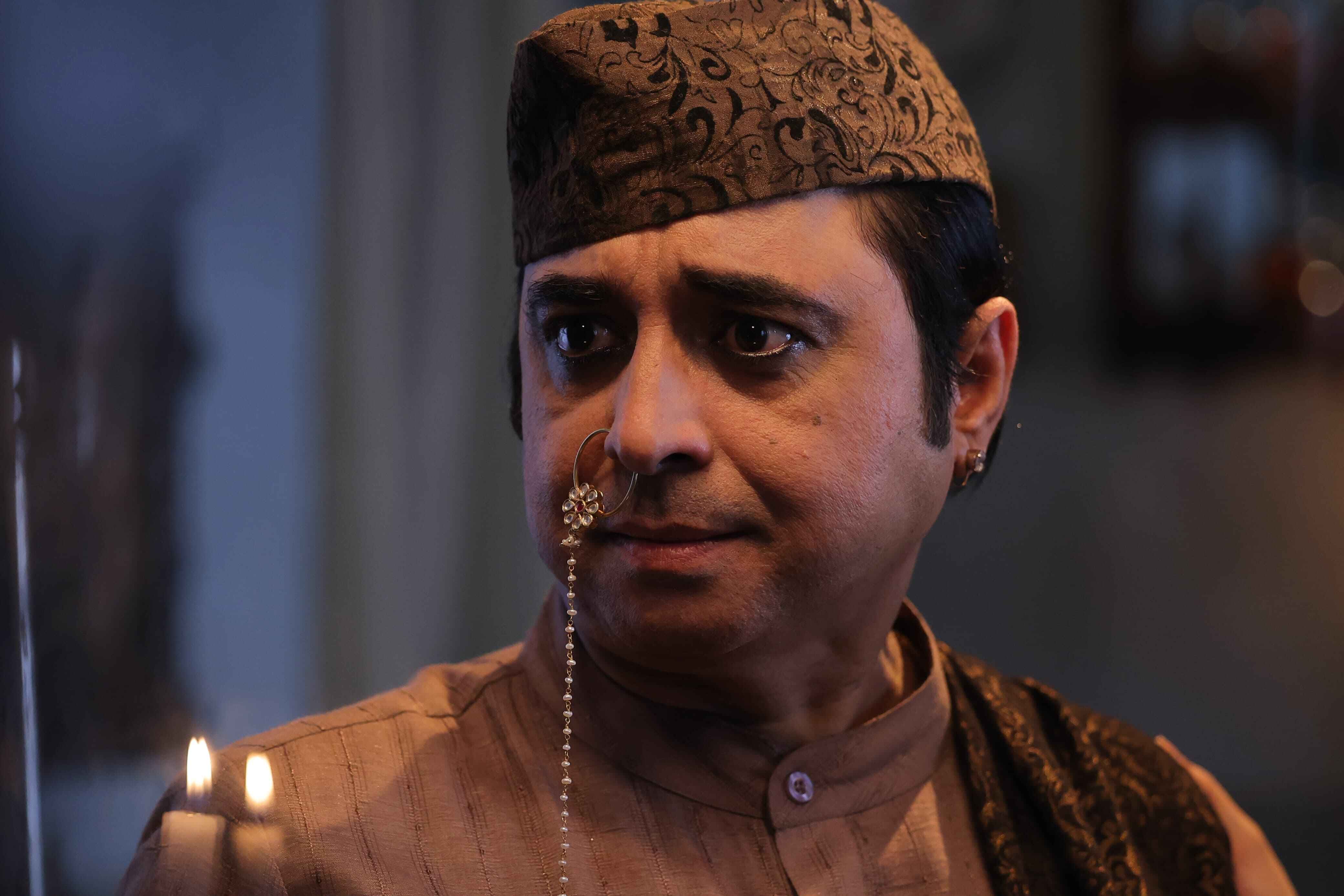




You must be logged in to post a comment.