Category: #Rashtradoot_Arbit_Stories

  • What’s Cooking? Science in the great Indian kitchen!

    What’s Cooking? Science in the great Indian kitchen!

    What happens when a software engineer enters the Great Indian Kitchen which has been the undisputed domain of women for centuries? Nothing much except that the engineer in him starts tinkering with all the ingredients, process and unravels the mystery of the Indian cooking!

    A free wheeling conversation with Krish Ashok, the author of ‘Masala Lab’ a book that says that cooking is really an every day science in action!
    Even today, guys are seldom into cooking. Some of them consider boiling Maggi noodles as their lifetime achievement. Now, it seems many men are getting more interested in cooking. Do you think this is a revolution of sorts? How do people react to the idea of a man cooking at home!
    Things are really changing at least in urban India more than rural India. Infact they are changing more than in South than in other parts of India. It is not as odd in South India to find a couple sharing cooking duties and chores at home. However, in a larger sense this is clearly changing in other parts of India. The pandemic has also forced some of this change, especially for young men living by themselves. Beyond a point, just ordering from Swiggy is not a solution. I think the lockdown and the fact that there were really times where you could not order food home forced people to say ‘I have to learn to cook’. Regardless of whether it was a two-month period or not, it did force people to really think of cooking as a basic skill. However, when it comes to men, there is no dearth of male professional chefs.

    In fact, a vast majority of men are professional chefs. Again, this has to do with gender bias in the sense that women were not allowed to go down the professional route. They were supposed to cook at home, within the four walls of the kitchen.
    So, it is not surprising that I get a lot of attention simply because I am a guy who is writing about home cooking and not restaurant cooking. But I do think things are changing for the better. In fact, as much as men are changing, young women of this generation are also clearly not accepting this kind of a behaviour. Today, they are openly saying that certain rules cannot be gendered and cooking is one of them. Just like taking care of a child beyond a point cannot be gendered. Otherwise, it places an unreasonable number of restrictions and challenges for women aspiring in a professional career since they have to balance everything including their career. Things are changing but these are still very early days since we are a big country. Even in my family, even today, a vast majority of men do not cook. The older ladies in my family really get awed if a guy can boil noodles or make tea but won’t bother to appreciate a woman cooking a fantastic dish because as per them, women are meant to do that. However, I think that after a couple of generations, things will really change.


    Do you think cooking is a life skill?
    Absolutely! In our world, there is climate change happening, there is an increasing awareness about sustainability practices regarding food. So, hence understanding what you eat and where it comes from has become essential. If you go by what’s currently happening with the farmer protests and the other problems of the world, I think the public knowledge of not what just you are eating but also of how it comes is also all the more important. I am not saying everyone needs to learn how to grow their own crops but at least they need to understand where something like bread comes from. They need to understand what is local. The fact of the matter is that there are reasons why certain ingredients are used in certain parts of India. They could be used because they are local, they grow in those climatic conditions and they will not deplete the resources of that area. But these days things are changing just for making money. For example, we have sabudana being grown in Salem in Tamil Nadu, where no body eats sabudana. All of it is exported to places like Gujrat and Maharashtra. You have basmati rice being grown in Punjab, which is not a rice eating part of the world at all. This is tremendous drain on the resources. I think we need to encourage a greater awareness about being more mindful and having an understanding about what you are putting in your body. At the end of the day food is the only foreign object you put in your body; that too willingly and twice or thrice a day! So, it is important that you pay attention to it. Cooking is an essential life skill because at the end of the day, the business of restaurants or the commercial supply chain or processed food industry is not sustainable because it has high carbon footprint and does not use local ingredients. It is salty, sugary and uses tons of preservatives to make food tasty and addictive. Let’s face it that at the end of the day, they have a business to run!


    How would you convince the parents who believe that it is not a man’s job to cook to allow their boys to learn cooking?
    Cooking is the basic of science. In schools, I think we should have a cooking lab next to all those sciences laboratories. In fact, my editor (who was from humanities background) said that if the science is anything harder than class VIII or IX, this book won’t sell. So, she told me to explain all the science behind processes like heating the oil, browning the onions or making curd in simple words. The book is doing so well that I am actually now getting requests from schools. In fact, I am going to be soon doing a demonstration in my son’s school (who is in class 3), along with the physics, chemistry and biology teachers. It is one thing to read about things like structure of a grain or its epidermis and another thing to see it in action in a wheat or a rice grain in a cooking laboratory. You could explain albumin or yolk in an egg, structure of a muscle or anything using the kitchen as a laboratory. So, all I have to say is that beakers and test tubes are all okay but seventy percent of the science practicals in a high school syllabus can happen in a kitchen because that is the place where biology, chemistry and physics intersect. You can explain thermodynamics of heat, you can explain basic chemical reactions, salt, acid, bases. You can explain the defence mechanisms of plants through spices! So, if we help parents of all those boys to understand that kitchen is the basis for their child’s education, then no one will have a problem in letting their boys learn cooking.
    These days many children don’t like to participate in household chores! What can be done?
    One thing that I have learnt from the west is that their relationships are about love but they are also transaction and negotiation based. The parents tell their children that they will give them the money but they need to do the chores first. They can play the videogames but they need to also do the laundry or clean up the kitchen. I think it is important that children should take part and participate in the household chores. Like my son has to put the clothes in washing machine and wash them. It is easy. He simply puts them and presses the right buttons. You need to ensure that your children do their bit in the household chores but these chores should not decide on the basis of gender. These days people send their daughter for helping with the car repair and son to help with the kitchen work.
    But if every one will learn all the secrets of cooking, how will a woman reach a man’s heart? After all, the way is only through the stomach!

    With all the apologies, if the only way to man’s heart is through the stomach then the man might as well learn cooking!

    This article appeared in Rashtradoot’s Arbit section on March 1, 2021.

  • Gulabo Sapera: The Girl Who Survived and Danced

    The mesmerizing dance of the Kalbeliya community has become famous all over the world. But, about 50 years ago, this community of snake charmers could never have thought in their wildest dreams that their daughters would dance and popularize this folk art. This phenomenon can only be attributed to Padamshree Gulabo Sapera- a woman who refused to stop dancing and living!

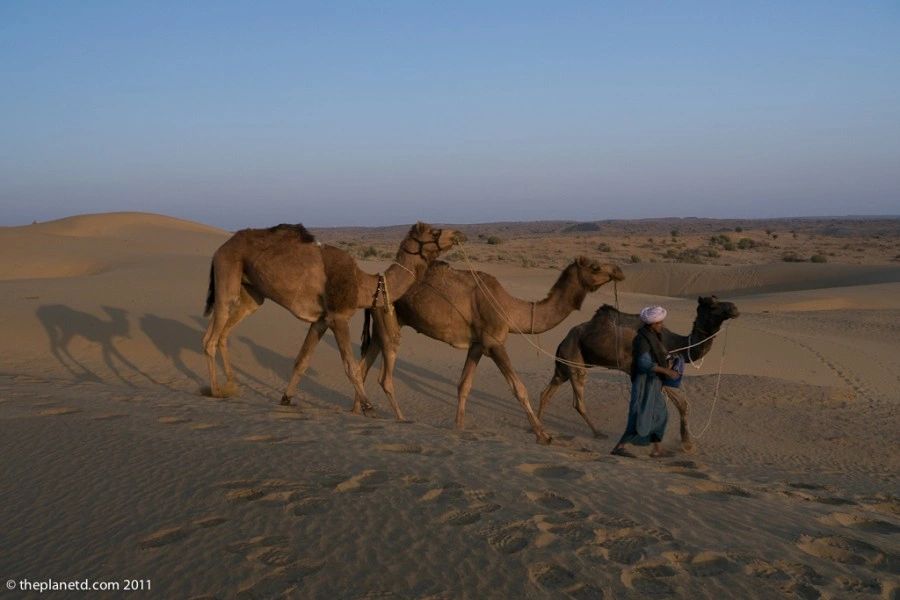
    The sand dunes of Rajasthan have been a silent witness to the changing times. They have been mute spectators of a time when thousands of new born girls were buried alive in their sands and died without a whimper. But then they have also witnessed the miracle of Gulabo Sapera, a girl who was buried in their folds minutes after she was born and lived to tell the tale.
    Today, the world knows her as Gulabo Sapera, but she was christened Dhanvantari after the Hindu god of medicine and nectar, after she was found alive despite being buried in the sand dunes. She belongs to the tribe of Kalbeliyas who are known for their ability to catch and tame snakes.
    Gulabo reveals, ‘We are gypsy people who live in the jungle, catch snakes and make them dance to earn money. Our people used to go from door to door asking people to feed the snakes milk and collect dakshina. In the old days, most girls were killed as soon as they were born because most of our tribe lived in the forests. There was an unwritten rule that no family could have a lot of girls in their house. If they wanted they could keep a single girl child but not more because abduction of girls was quite common in those days. Then, we were quite poor and most families don’t have enough money to ensure that their daughters along with the sons can be fed, clothed and protected or pay dowry in their marriage. When they had to marry their boys, they used to get girls from the chhabri community (basket weavers) by paying the bride price and marry them. These girls were brought from their families at a very young age. A lot of women in my family have been married like this.’
    The famous model and actor Milind Soman may have married Ankita Konwar, a girl who is 25 years younger to him but this trend is not new to Rajasthan. Gulabo says, ‘My father is 25 years older to my mother. Infact, my father was taking care of my grandmother when she gave birth to my mother. He travelled 10 kilometers, went to the village and got the things required for the delivery for her. So, my grandfather proclaimed that this newborn girl would not be killed and will marry his son once she grows up.’
    Having witnessed female infanticide in such close quarters within his family, Gulabo’s father was quite against it. ‘He wanted that men from our community should marry the girls from their own community instead of getting girls from other communities by paying the bride price. He believed that girls of his own community were far more beautiful and talented. He worshipped Goddess Chamunda and was dead against female infanticide.’
    Gulabo’s three elder sisters were protected by her father when they were born. ‘The people of our community were quite upset about the fact that my father did not allow any one to kill his daughters. I was the seventh, child, born after three sisters and three brothers. I was born on Dhanteras. My father had gone to buy some goods for the festival of Diwali. My mother slept out of exhaustion after the delivery. So, seizing the opportunity, the midwife who had come for my delivery, along with my five year old brother took me and buried me in the sands. When my mother woke up and demanded to see her new born, she was told that the baby had been buried. She insisted on visiting the place where I was buried and dug me up. Some how, I was alive despite being buried in the sands for more than five hours! As a result, I was named Dhanvantari after the gods of medicine and nectar.’
    However, her struggles were far from over. The next morning the village panchayat admonished her parents for saving their daughter after she was buried in the sands. Gulabo reveals, ‘My father received a lot of flak from the village panchayat. In their eyes, it was a sort of rebellion. But my father said that since I was found alive even after five hours of being buried in the sand, I was no longer his daughter but the daughter of the Earth Goddess! He told them to spare me and punish him in case they deemed fit. At that time, my father saved me from being killed. However, people were not happy seeing me alive. My father ensured that I did not stay in the village but travelled with him for his performances.’
    It was this travelling that helped Gulabo learn dance from the snakes. ‘I used to watch those snakes dance and I imitated them. Slowly and steadily, as I grew up, I learnt to dance like the snakes on the music of the been. After a while, I started dancing with the snakes wrapped around me. People started liking my dance and gave money to watch me dance. However, people of my community again objected that how could my parents allow me to dance and earn money? This continued but I did not stop dancing and people continued appreciate it. They started calling me Gulabo. When I was eight years old, I was dancing at the Pushkar Fair on a sand dune when I was discovered by the people from the tourism department of Rajasthan.’
    But her struggles weren’t over yet. ‘There was again a huge hue and cry in my community after I started performing in dance shows. But I paid no heed to them because now I knew that this was what I wanted to do. I was scheduled to travel to America for my first dance show when my father passed away on the eve of my departure. The people of the community said all sorts of things to me, they blamed me for my father’s death. They wouldn’t let me go. However, I begged them to let me go because I knew my father was my biggest supporter and he wouldn’t have stopped me from taking on such a big opportunity.’
    It was only when her name started figuring in newspapers and other journals that people of her own community started realizing her true worth. ‘When I came back from America, people of my village were awed at my popularity. Many of them told me that the people from other communities invited them to their homes and honoured them because they were related to me. They, who were treated with nothing but contempt had never witnessed such a change of heart or received such respect from the villagers.’
    As Gulabo’s fame grew and her art was revered in 153 countries across the world, the people of her community started viewing their own daughters in a different light and realized their potential. The infanticide which was so rampant earlier started declining as the daughters were finally allowed to live and dance. ‘They said that they wanted their daughters to emulate my success and help them to live better in the world. Today, girls are no longer killed in my community. In fact, they learn dance and earn for their families. Some girls manage to educate themselves. My husband supports me. We have five children, two boys and three girls. My girls love to dance. All my children are educated and have studied in English medium school. We will soon open a school for these girls where they will be educated and will also learn dance.’
    However, despite her success Gulabo feels that girls are still not viewed as equals in many segments of the society. ‘Girls still need to be careful lest they give the wrong signals. My parents always advised me to be conscious of my step in the public. They told me to always be alert and understand the body language of the people I talk to. The girls have to remain strong.’
    Gulabo’s journey is as legendary as this dancer herself. She has not only been an inspiration to the people of her community but has also helped people to realize the true value of girls!

    This article was published in Rashtradoot Newspaper’s Arbit Section on February 25, 2021.

  • The Man and His Beliefs : Prasoon Joshi

    ‘Jaipur is a melting pot of art and culture. People here not only revere and love to explore their heritage but also are open to new music, ideas and concepts. The entire ecosystem of Jaipur which includes people and infrastructure along with the attitude of the business people here make it an ideal place for such events.’ –Prasoon Joshi

    It is generally said that business and art seldom mix. People often feel that those who are adept in business cannot be accomplished artists and vice-versa. However, Prasoon Joshi who is not just a marketing guru but also an award-winning lyricist, poet and screenwriter loves to defy conventions and enjoy all that comes his way. We caught up with the man who believes that there is nothing more important than life itself at the Jaipur Literature Festival.
    You are not just a marketing guru but also a lyricist, a poet and a screenwriter. How do you juggle so many hats at once?
    I believe that we should try to do justice to the life that has been given to us. I really admire people like Asha ji (Asha Bhosle) who have been able to balance family, raise children and yet have a successful career. I too strive for the same thing. I have my aged parents who live with me and I love taking care of them. I believe we need to first fulfil our responsibilities towards other people and then towards ourselves. So, if you have a dream, a talent or an ambition, go after it by all means but don’t forget your responsibilities and the people who love you or are dependent on you.
    These days a lot of people talk about battling inertia, stagnation? How does one counter that?
    I don’t understand these words. Where is inertia? Where is stagnation in life? The thing is we are looking at very narrow definition of the word engagement. People think engagement is just about work or projects. No, the truth is engagement is about life. You may not be doing well professionally but you can always find engagement in your personal life, with your family members, with the people you love. When I am not working, I love talking to my daughter, travelling with her, helping her to do her homework. Engagement can be anything. To me, engagement is collecting memories. My grandmother was a village woman who did not start her education till the age of 19. Then she studied and retired as the principal of a school. Look around you, life is thriving. There is no dearth of things to do. All you need to do is to broaden your perspective and listen to your heart.
    What about writer’s block? How do you deal with it?
    You just need to shift your focus to something else. Stop getting stuck in a place. Move on and it will pass with time.
    How do you get your ideas or inspiration?
    Ideas have a life of their own. They will come to you, provided you have the right intent and vibrations. If you are in the creative zone, sooner or later you will get great ideas!

    What do you say to yourself when you look at the mirror first thing in the morning?
    Actually, I don’t really look at the mirror except when I am stepping out of the house. I like to look at the stars, the sky, the flowers and the grass. Nature is the biggest motivator for me because as all know, I have spent my entire childhood in the lap of nature in Uttarakhand. So, whenever I need energy or inspiration, nature rejuvenates me, inspires me and makes me feel truly alive. My music is inspired from nature. I love pahadi music, the feelings and emotions it imbibes in the listener.


    Do you ever talk to yourself?
    I love talking to myself because I believe that is how I am able to sort myself out. In fact, I have quite a pronounced dialogue with myself. I penned down all the conversations that I have with myself in first book that I wrote Main aur Woh (Me and Myself). I think it is important to talk to yourself because that helps in sorting out your feelings and emotions and even get an inner connect. These days we are so busy talking and chatting on social media, mobiles and phones that we have forgotten to talk to ourselves. We are no longer in touch with our own feelings and emotions which is why the youth of today have such issues with relationships. If you do not have a relationship with yourself, how will you have a relationship with others?
    Music has travelled in time from gramophones to cell phones. What do you think is the next phase of music?
    The term music has become quite broad. What do you define as music? You have songs, then remixes, words without music (rap). Right now, the definition of music encompasses almost everything. Somehow, I feel the next phase of music will be utter chaos. I was telling Gulzar saab the other day that he and his generation of poets and song writers had more meaningful and beautiful words to choose from as compared to today’s world. Today, people are resorting to short forms, shrinking and mutilated words. Sometimes, I simply hate the kind of songs that are written today. Even with music too, we will probably not know what is music and what is not music. However, after this chaos, the audience will start rejecting the bad music and they will start searching for melody and rhythm again. Now that our planet is more or less a global village, the interaction of world cultures will also impact music to a large extent. You will get to hear more fusion music and amalgamations that will be in a class of their own. Moreover, festivals like these will increase since people will also crave for authentic and pure music, books and arts.


    What’s your favourite food?
    Food is a memory device. I love what my grandma used to make. It is called Churkani and it is made from black soyabean dal and rice. The taste and smell remind me of my home in Uttarakhand. However, I am not fussy about food. When I was a child, I was not given a choice about what I could eat or not eat. We ate whatever my mother cooked. She cooked seasonal vegetables and food which she felt would be nutritious for us. We were not allowed to waste food. My parents always told me to be grateful for food because there are many people who do not even get two square meals a day! I am not a foodie but I do like to try the local foods of the places I visit to understand the culture of the place.


    What is your favourite colour?
    I like all kinds of colours like green, blue, white and black. I am not very fussy about clothes. If I like something, like a shirt, I buy five. I don’t like thinking much about clothes and prefer if someone just gives me something to wear. I like many colours but when it comes to wearing clothes, I like black and darker colours because it allows me to look always dressed.
    What is your favourite day of the week?
    I love Mondays since I can go to work. I love working.


    What is your favourite destination?
    I love travelling but mountains will always remain my favourite destination.
    Why do you think Jaipur is becoming a focal point of most art and cultural activities whether it is music or literature?
    Jaipur is a place which provides an unbiased and non-judgemental platform which respects every artist. It is also a melting pot of art and culture. People here not only revere and love to explore their heritage but also are open to new music, books, ideas and concepts. The entire ecosystem of Jaipur which includes people and infrastructure along with the attitude of the business people here make it an ideal place for such events.

    This article was published in Rashtradoot’s Arbit on 21 February 2021.

    Shailaza Singh
    Published Author, Poet and Youtuber

  • Virtually Yours- Jaipur Literature Festival 2021

    Will the virtual version of Jaipur Literature Festival be able to enchant its audiences like its real counterpart? In this post pandemic era, will the readers be able to digest this literary reality?

    On my way to the Diggi Palace Hotel, scenes from the last year’s Jaipur Literature Festival flashed across my mind’s eye. People carrying books in their hands, their bags bulging with books. Hundreds of people queueing in front of the kiosks, eager to get their books signed by their favourite author. There were some who had positioned themselves next to their favourite spot for the next session and were patiently waiting for the next session to begin. Elsewhere, many die-hard foodies were sampling the exotic dishes that had been painstakingly prepared by the chefs of Diggi Palace Hotel. Some die-hard fans were deep in conversation with their favourite author over a cup of tea or coffee! The green of the lawns of the sprawling palace were hardly visible amidst the colourful tents that were erected and the audience that occupied those lawns for the author sessions and discussions.

    As I entered the gates of Diggi Palace, my reverie was broken by the cry of a peacock. I looked at the empty lawns and the peacocks who were walking across them as if they owned the place. And then the reality that I had refused to accept struck me! Jaipur Literature Festival would be an online affair in 2021. I walked to a corridor where Sanjoy K Roy, the managing director of Team Work Arts, the company which produces the festival was talking to a handful of people. They were waiting for B.D. Kalla, the art and culture minister, who was to officially inaugurate the Jaipur Literature Festival 2021 which is being held from 19 February 2021 to 28 February 2021. When I asked him for his views on the online change forced by COVID, he was quite upbeat about it, ‘Yes, this time people all over the world have registered for the festival. When the festival was held here, hardly any people from Germany could come. But now, we have so many people registering from different countries like Germany, Saudi Arabia and all across the world. The reach of the festival has become global in the true sense of the word.’
    I remembered the bygone times, where the tourists and the people living in Jaipur would plan to spend their entire day at the Diggi Palace Hotel. Once they entered the venue, the visitors did nothing else except listen to author sessions or explore the various delights the festival had to offer. Some of them would even get their durries to have impromptu picnics in a corner of one of these lawns. Would the online version be able to captivate the audience in the same way? Would this online audience have as much dedication and staying power as the audience in the physical version of the festival?

    ‘We do hope it would,’ said Sanjoy K Roy. ‘To engage our virtual audience, we have curated a great line up of authors and speakers who would talk about a variety of topics ranging from books, nationalism, pandemic and more. This time, instead of having multiple sessions at the same time (in the physical versions, there were different sessions conducted by different authors in four different venues at any one given time), we will only have two sessions at the same time, so that the people don’t have to worry about missing out these sessions.’ Going forward, once the physical version of the festival is restored, will they still continue with the online version too or is it just for this time? ‘Definitely,’ said Sanjoy K Roy, ‘the online version will now be an integral part of JLF since it has definitely helped us to expand our reach and increase our audience across the globe.’

    But would the viewers spend their entire time listening to the sessions as raptly as they did in the physical version? Sanjoy K Roy shrugged his shoulders, ‘May be not the entire time but from our experience during the pandemic time, I can say that the average viewing time was about 18 minutes per viewer which is more than the average of 7 to 8 minutes on OTT platforms. Moreover, while we could only accommodate a maximum of 15,000 people in the front lawn in the physical version of the festival, in the digital version we have received an average of 32,000 views per session, which is way higher.’

    Our conversation was interrupted by the entry B.D. Kalla, minster for Art and Culture, Rajasthan who had come to virtually inaugurate the festival. I watched as Sanjoy K Roy greeted the minister and then took him to light the lamp to signal the commencement of the festival. One could actually see the effect that the pandemic has had on the world as people wondered whether to light the lamp with or without wearing the masks. Ultimately, they decided to film both the versions and take the decision later. Last year, there was a crowd present to witness this inauguration, this year there were only peacocks and a handful of people.

    When he was done with the ceremony, I asked Sanjoy K Roy about the controversy surrounding the venue of the festival- Diggi Palace Hotel. Weren’t there articles and rumours about Diggi Palace Hotel no longer being the venue of JLF? And if that was the case, what was the future of JLF in 2022? ‘As of now, I am glad that thanks to the pandemic, the venue has not changed and I hope that will remain the case in the next year.’ What if the venue is changed? Where would the festival be held? ‘It is too early to comment on this but yes one thing is for sure that JLF will not go out of Jaipur.’

    During the 13 years of its physical presence in Jaipur, JLF was not just an event that people looked forward to. It had become an important source of tourism and income for hotels, tourist guides, autos, busses and many street vendors who waited for the festival to earn their yearly income. The festival may have survived by donning an online avatar, but what would those people do this year? Sanjoy K Roy smiled sadly, ‘What can I say? It has been the case everywhere. The pandemic has impacted every one including us. Just this morning as I was coming here, I met the guy who used to sell his wares outside the palace during the festival. He told me how difficult it was for him and his family to survive this year since there would be no tourists or festival to sell his wares. We are hoping that we are back to business as usual in 2022 so that people are able to compensate for their losses.’

    Ever since the onset of the pandemic, the world has been reeling with the deluge of online conferences, webinars, meetings and all sorts of virtual events. Many employees swear by their power naps and zoning off techniques to cope with the online information overload. It is indeed a challenge to sit glued to one’s chair and listen to the ever-droning colleagues and bosses without switching off.  Students all over the world have been earnestly hoping that they are able to physically attend their schools since online classes no longer hold their interest.  Some studies have suggested that it is difficult for human beings to concentrate on online events for an extended span of time. Moreover, most celebrities, authors and other speakers have their own channels in Instagram, Facebook and YouTube where they keep talking to their followers about their books, achievements and activities frequently.

    In such a scenario, will an event like the Jaipur Literature Festival be able to hold the attention of the netizens? In the real world, the authors sessions were punctuated by coffee breaks, question- answer sessions, a visit to the book store, author signings and interactions and many more such activities which cannot be replicated even in the most technologically advanced version of the online festival. The question is even if the festival has been created using the most curated list of authors and advanced technology, will it be able to satisfy the audience’s need for a face-to-face conversation with their favourite author or smelling the pages of a brand-new book in the book shop or getting it autographed by its author? Will this virtual version be able to replicate those moments and experiences? Will the audience learn to love this version as it loved the physical festival? Maybe or maybe not! Only the people and time will tell.

    This article by Shailaza Singh was published in Rashtradoot Newspaper’s Arbit Section on 17 February 2021.

  • No Free Lunch!

    No Free Lunch!

    Book review by Shailaza Singh (published in Rashtradoot Newspaper on 22 January 2021)

    In their book, The World of Energy, Engine of Life, Raj Sharma and Vishnu Pareek analyse the entire spectrum of energy, from conventional sources to various alternative sources. The book also provides a perspective on energy policy over the years and explains the fundamentals of energy and all related aspects using clear and straightforward language.

    Book Title : The World of Energy, Engine of Life

    Authors : Prof. Raj Sharma is currently an Adjunct Professor at Curtin University’s WA School of Mines: Minerals, Energy and Chemical Engineering. Prof. Vishnu Pareek is currently serving as Head of the WA School of Mines: Minerals, Energy and Chemical Engineering, and as Dean of Engineering at Curtin University.

    Publisher : Springer

    I loved studying science during my school days. During those times, there was a lot of talk about how fossil fuels like coal and petroleum are polluting the world. Chapters about these topics in our school books talked about how these fossil fuels must be replaced by renewable sources of energy like the wind or the sun or electricity. A lot of time has passed since then. However, despite the Gulf war and the excessive hue and cry about issues like pollution or global warming or ozone depletion, alternative sources of energy have really not been able to dominate the world at large. Yes, there are increased instances of people using solar panels or windmills or water or nuclear for generating electricity but they are few and far between as compared to the excessive dependence that the world has on fossil fuels. Despite the various advances in science and technology in the last two decades (internet, smart phones, other gadgets etc.), nothing much has been seen on the horizon for harnessing energy from the much-touted cleaner sources.

    This question has always been there on my mind but I could never get an answer to it. The topic of renewable energy sources, pollution and fossil fuels is a good option if you want to sound very smart and intelligent in social conversations but ultimately all those people just end up shaking their heads and shrugging with resignation when one asks them about the solution to this predicament. However, the question about renewable sources of energy has still remained unanswered despite the media’s hullabaloo about all these issues.

    So, when I picked up the book titled ‘The World of Energy- Engine of Life’ by Professor Raj Sharma and Professor Vishnu Pareek, I did not have any expectations. After all, after decades of discussion on this topic, the endless debate by the media, the protests by people who believe the world is going to end any day, what could this book which has been published by Springer say which had not been said before?

    Energetic Revelations about (US)

    As I was reading the book, a paragraph really caught my attention.

    “President Carter in his address from the Oval Office on July 15, 1979, said among other things:

    …. calling for the creation of this nation’s first solar bank which will help us achieve the crucial goal of 20% of our energy coming from solar power by the year 2000. Solar energy contribution to the energy pie in the US today (2018) is less than 1.0%- as against the target stated by President Carter of 20% by 2000!”

    The authors go on to say “US with 5% of the world’s population, uses about 20-25% of the world’s energy to lead the lifestyle that it does! One can only try and imagine what would happen if India and China with a third of the world’s population were to provide a similar lifestyle to their people.”

    So much for solar power! This is a fact from a country which is touted as a world leader in technology and lifestyle. Moreover, the book also talks about how most countries in the world believe that replicating the Western (US) model of development would be the ultimate sign of having arrived in the developed world but in reality, the model is quite unsustainable since the wastage of energy by the country is quite high.  The authors also bring out the stark contrasts between the energy consumptions of various nations versus their population. What captivated my attention was that today US and China (which is following the US pattern of development) collectively consume about 40% of the world’s energy despite having only 24% of the world’s population! The authors say that the development of China happened on the back of cheap, abundant and reliable energy which was readily available in the form of fossil fuels which fulfil about 87% of China’s energy need. Though India’s energy consumption is less than 6% of the world, 92 % of its energy needs are being met by fossil fuels!

    Another myth that this book dispels is “‘green energy’ is not really ‘green’ since it requires ‘black (fossil fuel) energy’ to harness, transform into a usable form and control its use to deliver the benefits of modern life.”

    Much ado about Carbon Emissions

    By this time, I was hooked because everything this book said was different to what has been largely propagated in the world. The media has been talking about how the carbon dioxide emissions have exponentially increased due to the rapid industrialisation etc. However, the authors say that carbon, which we all know is the fourth most abundant element in the universe is the essence of life on the earth and in the form of carbon dioxide the only source of oxygen that we breathe. According to them the human population in on earth a hundred years ago was about 1.7 billion with a reported CO2 concentration in the atmosphere of about 100 ppm; today (2020), the human population of earth is about 7 billion with a reported CO2 concentration in the atmosphere of about 400 ppm!

    Out (Laws) of Energy Efficiency

    The three laws of thermodynamics which are considered the gospel truth as far energy is concerned are as popular as the laws of gravitation. However, I have never seen anyone interpret them so interestingly till now.

    “-You cannot win

    – You cannot break-even either, and

    – Everything eventually goes to ‘naught’”

    Whether in science forums or important sounding books and journals, people keep talking about how to maximize energy efficiency. However, the authors of this book are very clear that “one cannot do without energy-but there is no free lunch!”

    Sunning Away!

    Everywhere in this book, the authors have clearly stated some interesting facts!  Every form of energy whether fossil fuels or the much-hyped alternate sources are a result of the sun shining on the earth. Without the sun, nothing is possible!

    The only ‘green’ energy on Earth in the present day meaning of the term, is that received directly from the Sun in its raw, nascent and pristine form. Period. Full Stop. Everything else is ‘Black’. Nature has provided an automatic clean-up mechanism for the carbon waste in the form of the carbon dioxide cycle. It is the ‘clean, green energy- solar and wind in their raw and natural state-that gave Man his start and it is this energy that Man left behind in his quest for ever more.”

    (Has the) Climate Chang(ed)?

    “It is interesting to note that CO2   in the Earth’s atmosphere has been much higher in the past than it is today; and, there does not seem much correlation between CO2 concentration and Earth’s temperature.”

    The authors believe that labelling climate change as a man-made phenomenon and to pin it on fossil fuel driven carbon dioxide emissions is too simplistic. They believe that earth has been through cycles of warming periods and ice ages over hundreds of millions of years where sea levels have risen and deserts have been formed time and again. The activists have been harping away and campaigning on the ‘burning’ issue of the climate change but the book begs us to think about it from a different perspective!

    (No) Conclusions

    This book offers no conclusions or solutions- the authors have been very clear about this aspect from the beginning to the end. They have simply presented facts based on a lot of different studies that have been done over the years which in a way dispel many myths surrounding the world of energy. Yes, there are some suggestions like revisiting the old cultures like those of India and other countries of the world to understand deeper aspects of energy and its conservation but even those are marked with a ‘perhaps’. The authors make no bones about the fact that fossil fuels do have a competitive edge over the other alternate sources of energy due to a variety of reasons like their ease of use, availability and harnessing power.

    The Last Word

    The debate on energy has been a long standing one. Over time, the lack or abundance of energy has caused wars, created controversies and catapulted many activists to limelight. This book brings a lot of perspective to these burning topics and is interesting even for those who are not from a science back ground and offers an insight into the much debated and very controversial topic of energy. Read it and form your own conclusions! After all, there is no free lunch!

  • Politically Incorrect? Maroof Raza’s speaks his mind!

    Politically Incorrect? Maroof Raza’s speaks his mind!

    Maroof Raza, India’s leading expert commentator on strategic and defense affairs, talks to Shailaza Singh about various issues including Kashmir. He has authored several books and opinion pieces besides producing an award winning television series on the many wars and operations conducted by the Indian armed forces. Raza loves to speak his mind without being ‘politically correct’.

    Maroof Raza, a retired army officer loves wearing many hats. He is a consultant and strategic affairs expert who has appeared in almost all of India’s leading television channels as an expert on military and security matters in India and BBC world service radio programmes. He has also authored books like Kashmir’s Untold Story (Bloomsbury India), Confronting Terrorism (Penguin India), Low-Intensity Conflicts- The New Dimension to India’s Military Commitments and No Peace Over Kashmir. He is currently working on a new television series titled ‘Tales of Valour’ which focus on the acts of bravery in the past battles of India.

    The first impression that one gets on meeting the man is that he loves to speak his mind, a rarity in today’s day and age where people aspire to become ‘people pleasers’ and have developed a penchant to be politically correct even if it means stifling their own hearts and minds.

    By his own admission, his children tell him that he is completely out of sync with the real world since he does not have any social media accounts and always keeps his mobile on silent. When he talks, all one can do is listen in rapt attention.

    Pakistan’s Kashmir Fixation

    Pakistan has always had this dream of conquering Kashmir. They even tried to annex Kashmir by sending in troops but were repelled by the Indian forces on October 27, 1947. Christopher Snedden, the well known Australian author, political scientist in his book ‘The Untold Story of People of Azad Kashmir’ says that Pakistan has a permanent government-in-waiting in Azad Kashmir who are prepared to unfurl the Pakistani flag once the Kashmir valley falls. For them, that is when the process of formation of Pakistan will be complete. However, what they don’t understand is this is a dream that they will never realize under any circumstances. The interesting thing about the line of control (LOC) is that it is not just a military divide but also a physical, demographic and geographic divide. Given the current LOC’s strategic location and terrain, it is not possible for the either side to conquer any more land.

    After the war in 1971, Prime Minister Indira Gandhi was instrumental in establishing the line of control. She categorically told the Pakistan government and the Prime Minister Zulfikar Ali Bhutto, at that time that there will be no further wars. However, what many did not realize was that she was doing a peace arrangement with a man who had built his entire career with hostility towards India. It is interesting to know that for ten years, Zulfikar Bhutto was an Indian national. He had studied in Mumbai. He adopted Pakistan’s nationality only in 1958. He was waiting in the wings to see whether it was worthwhile to go to Pakistan or not. Not only that, he was the man who orchestrated the surrender of the 1971 war. It was not the Indian army per se. It was he who was sent by General Yahya Khan, the president of Pakistan to New York to negotiate with the UN so that the cease fire could be announced. Bhutto did not want the cease fire but was being pressurized by Yahya Khan. So while in New York, when General Yahya Khan asked him on the phone about the cease fire, he told him he could not hear him. The operator told Bhutto that he could hear General Aya Khan but Bhutto told him to stay out of it. Bhutto wanted to prolong the ceasefire process till Dhaka fell so that Pakistan army could go back motivated.

    The entire concept of Pakistan is based on anti-Indian identity. There was no thought about progress of the people. The man Muhammed Ali Jinnah, who created the new state of Pakistan was himself not a believer. Today, people of Pakistan are suffering from the incessant factional wars in Pakistan and the level of human rights abuses.

    Solving the Kashmir’s Problems

    I always say solve the problems in Kashmir so that you don’t have a problem of Kashmir. Our government needs to solve the issues of broken schools, colleges and hospitals. Give the people of Kashmir the best engineers, best administrators. In my conversations with the National Security Advisor, Ajit Doval, I have always been of the opinion that we need to have a tear off calendar for Kashmir. If you make Kashmir a heaven by giving them all the modern-day amenities to its people, it will be like Singapore or Dubai. Does any one talk about freedom in Singapore or Dubai? In India, a few handful of politicians have kept the pot boiling because that is their bread and butter. When the Prime Minister Narendra Modi called me during his first tenure and asked me for advice, I told him to go all out on Kashmir because as it is no one is giving this government any extra points for doing anything in Kashmir. All we need to do is just make Kashmir a place where people can go for holidays, do business, have intellectual discussions. Of course, the most important thing is that we need to seal it from Pakistan.

    However, I am of the opinion that keeping Kashmir on the boil is profitable to many people in our country. The home ministry of India will become irrelevant if you solve the Kashmir issue. They will be dealing with Padma awards and pensions. The paramilitary and armed forces will be at a loose end because they will have no war to fight and no medals to win. The contractors want everything to be permanently temporary so that they do not have to face any audit. The NGOs want a conflict to be able to cry on and get funds. Pakistan, of course enjoys all this chaos because it helps them to keep their people diverted from the inability of the government to deliver on any account.

    China’s Game Plan

    Pakistan is merely a foot soldier in China’s game plan. In intelligence terms, we call it the Jeff and Mutt Policy where China plays the nice guy and the bad guy with India at the same time. They are getting an annual trade of about 40 billion USD from India. This is the same money that they are investing in Pakistan under the China Pakistan economic corridor. We have gotten so used to cheap electronic goods that we cannot say no to buying these goods. Moreover, we in India cannot emulate China when it comes to their manufacturing industry. US banned Huawei because they found some chips that they suspected might be transmitting information in a lot of defense equipment supplied by China.

    The Enemy Within

    People don’t understand army and that is not their fault. It is the fault of the Indian Army. When I talk at the events organized by the Indian Army, I tell them because biggest enemy of the armed forces is the armed forces themselves. I wanted to make a movie on the Balakot strikes. For this, I talked to the Ajit Doval, National Security Advisor, who thought it was a great idea. So, asked him to talk to the air force authorities to give me unclassified information. He agreed. When I went to the air chief’s office , the public relations officer (PRO) did not help me and said that letter is required. I asked him if tomorrow if the NSA calls you up to tell you of an impending strike, would you still want a letter in writing? That project fizzled out. I told the PRO that if they cannot take a decision to make a film how will they take a decision to engage with the enemy?

    Army needs decision makers like Lt. General Sagat Singh, PVSM, who had literally filled the Nathula pass in 1965 with the bodies of the Chinese soldiers. The authorities then decided to remove him from his command because they felt that he was too decisive. In the 1971 war, they brought him back which changed the course of the war. The point is you cannot disregard that quality of taking the right decisions at the right time in an army man. If at the level of a Lieutenant General you are indecisive then are you waiting to become the army chief to become decisive? Everything in the army has become very rank centric. During my tenure in the army, I believed in doing a thing and getting over with it.

    This article was published in the Arbit section of Rashtradoot Newspaper on December 12, 2019

  • Dapu Khan- The living legend of Kamiacha

    Dapu Khan- The living legend of Kamiacha

    Amidst the sea of sand- Dapu Khan- a Merasi musician, who is also an exponent of Kamiacha, one of the oldest bowed instruments of the world- carries a 1500 year-old legacy in his powerful and soulful music.

    His rustic voice creates a mental picture of the endless dunes that play with the winds in the desert of Rajasthan. He sings of Kabir, of finding long-lost love and love stories that are still alive in the sun-kissed sands. His name is Dapu Khan, a Merasi musician who is also an exponent of Kamiacha, one of the oldest bowed instruments of the world.

    Dapu Khan, who lives in the village Bhadli near Jaisalmer had come to Jaipur as a part of the ongoing Rajasthan Kabir Yatra which travels across Sikar, Jhunjhunu and Jaisalmer regions. The audience in the amphitheatre at the Jawahar Kala Kendra welcomed Dapu Khan with a thunderous applause and whistles that spoke of the musician’s popularity amongst all age groups. His soulful renditions of Kabir’s bhajans entranced every one present and they all kept nodding their heads and clapping their hands to the beat.

    Despite his popularity, Dapu Khan’s simplicity reminded me of bhajans that he had just sung. Here are some excerpts from the tete-e-tat:

    Since when have you been singing Kabir’s bhajans?

    Kabir’s bhajans are very old and I have been singing at least eight of his bhajans since a very long time.

    Why is Kabir so popular even today?

    Kabir’s works speak of the world, he speaks of selfless action, he does not criticise anyone nor does he praise anyone. He is only connected with the supreme power. He tells people that you shall only reap what you sow. He talks about cleansing one’s own mind and heart and keeping the five senses in check. ‘Kabir Kabir kya kare, socho aap sharir, panch indriyan vash karo, aphi das Kabir.’ (Why do you keep calling out to Kabir, control your five senses and you will also become like Kabir).

    What attracts today’s youth to Kabir?

    People who have started knowing Kabir through music or through teachers or hermits are drawn to Kabir’s works because of their simplicity and the eternal truth that they speak.

    What is your experience with Kabir Yatra?

    This is the first time I have been associated with Kabir Yatra and so far its been a good experience.

    What is your take on the today’s audience for the ancient Indian arts like yours?

    Indian tourists and Indian people visiting India from abroad value these arts more than people who live here. The ones who come visit from other countries like to hear these songs and even record them and take them back with them.

    What else do you do besides playing music and singing?

    I have old books of all religions and great writers. I read them whenever I get time. I also help people to find their lost things by smelling and calculating the names and numbers of people they are associated with. I also calculate the day and the month and season too matters. This is a calculation which has been passed through word of mouth from our ancestors.

    Dapu Khan’s life seems to be a reflection of the Sufi Bhajans that he sings. He is an ardent believer of the goddess Karni of Deshnokh and has named his sons after her. He sings his songs with an abandon that matches that of the well-known saints. This unassuming man is one of the few exponents of Kamiacha, an instrument created out of a single piece of wood, and has not been changed since the last 500 years.

    The burgeoning crowd at the Rajasthan Kabir Festival is a clear indication of the fact that Indian audience still enjoys listening to musicians like Dapu Khan. However, unlike the Bollywood movies or other forms of popular art that are publicised days in advance, there seems to be a dearth of publicity when it comes to these festivals. The lack of space seems to be another problem that plagues such events. The amphitheatre at the Jawahar Kala Kendra was almost full but people still found place to sit on the grass and on the steps. Today, our folk artists and their artforms need a new rendezvous with the youth who enjoy them when they get a chance. The atmosphere is created, all we need is to spread the word and create some space in our halls and hearts.

    Shailaza Singh

    Published Author, Poet and Musician

    This article was published in Rashtradoot’s newspaper’s Arbit section on October 4, 2019

  • American Kachori- A Random Encounter in Anokhi

    American Kachori- A Random Encounter in Anokhi

    Shailaza Singh bumps into Maria Jose Padgett, a 26-year old dress and jewelry designer from Texas, who works with Jaipur’s artisans to develop dresses and jewelry for American customers,

    ‘You know what is the most amazing thing I love about Jaipur? Sometimes, the façade or the entrance of the building looks so ordinary and plain that nothing prepares you for the beautiful textures or interiors.’ The speaker was Maria Jose Padgett, a 26-year old dress and jewellery designer from Texas.

    Sometimes, serendipity strikes and the chance encounters with strangers from a different country help you to gain a new perspective about your own country. Something similar happened to me as I sat sipping coffee in Anokhi Café. Since there was a dearth of tables, I was sharing a table with Maria Jose Padgett, who frequently visits Jaipur for her designer brand ‘Zindagi’.

    ‘I love Bollywood movies. I saw this movie, ‘Zindagi Na Milegi Dobara,’ and decided to name my brand ‘Zindagi’ because just like life, my jewellery and dresses are completely unique. No piece repeats itself.’

    ‘I originally am from Honduras and my sisters and me live in Texas in USA. I first came to India in 2014 with my ex-boyfriend’s mother. She is now a fashion designer and she introduced me to the world of fashion. I visited the Janpath market in New Delhi and there I saw the most amazing jhumkis (earrings). I decided to explore more and visited Jaipur. I was amazed at the style and variety of jewellery and dresses. Soon, I decided to create my own brand ‘Zindagi’. Earlier I used to buy jewellery and ready made clothes from here and sell them in the States. In 2017, I actually started designing my own jewellery and clothes and came back to Jaipur. Now I come every six months or so to work on my designs with the artisans who live here.’

    I asked her about her impressions of Jaipur. ‘Jaipur is so unlike Delhi. People here are so friendly and open. I don’t know if this is because I am a foreigner or something but I have always had people come up to me and talk to me. They have invited me to dinners and we’ve had long chats. The fact that I speak a little bit of Hindi also intrigues them. I have ended up making great friends with people from all walks of life. I spend most of my time with my artisans, the block printers and the jewellery creators here who create these amazing pieces of jewellery and dresses for me based on the designs I give them. Last week, I took their entire family to dinner. We’ve become such a close knit family now. When I am at work with them, we sing and play Bollywood songs and share our life stories. It is amazing that it was my driver who introduced me to these artisans and now they are such an integral part of my family.’

    What else does she like about Jaipur? ‘I love raj kachori so much so that my friends call me ‘kachori’ now! Once when we were travelling to Jodhpur, we stopped at a road-side dhaba. I ordered raj kachori and chat much to the amusement of my friends who were travelling with me and since then my nickname is ‘Kachori’ , she laughs.

    ‘The thing about old Jaipur is that there are so many alleyways to explore that one leads to the other. Like the other day, I was in Jauhari Bazaar and I kept walking in and out of alleys and saw all these jewellery makers. Then I also like the way children still play games like tag and hopscotch outdoors in the evening. In Honduras, there are safety issues and children don’t play outside and in the States most of them so hooked on to their mobiles and i-pads that one does not see a lot of children playing these games. What I also like is the way people can open their barber shop or any other shop in the streets. In Texas, I don’t get to see much of that. Then I also love the way these artisans teach their craft to their children and how it runs in the families. I don’t get to see that much in the world. Here heritage is really valued and preserved.’

    So, how did her parents react when she first proposed the idea of going to India in 2014. ‘When I came to India for the first time, my parents thought I would get kidnapped and they will never see me again. But my ex-boyfriend’s parents convinced them and they agreed. Now they are so used to it. In fact my mother and sisters have also visited Jaipur a couple of times and they have loved it!’

    What does she think about Indian men? ‘The Indian men I am surrounded with are very protective and very respectful. With my artisans who are mostly men, they are so respectful towards me. I feel blessed to have them in my life.’

    So, how do people in her country see India? ‘I wear the traditional Indian dresses when I go to weddings in my country and it intrigues people. They are intrigued by the fact that I visit India so often and they ask me about how India is and whether it is safe to visit and I tell them that India is an adventure and people here are very friendly and hospitable.’

    So, how does she view life? ‘Life for me is ‘Zindagi’ where I am thankful for every blessing that has come my way. My work, my friends in three different countries, the warmth that I experience in this place have all been so fantastic. There are times I feel like buying a place of my own in Jaipur because I would want to get my children and grand children here and let them experience this unique and unforgettable city with all its warmth and love.’

    Shailaza Singh

    Published Author, Poet and YouTuber

    This article was published in Rashtradoot’s Arbit on October 1, 2019

  • Shabnam Virmani- In Kabir’s Footsteps

    Shabnam Virmani- In Kabir’s Footsteps

    Shabnam Virmani is known for her soulful renditions of Kabir’s bhajans through which she educates people not just about Kabir but also inspires them to imbibe the values preached by the mystic poet.

    The annual Kabir Festival has it all; singers who create magic with their voice, musicians who make music through their very being and the audience who absorbs these soul stirring renditions like a sponge. However, as unique as every artist is, Shabnam Virmani seems to be a person who has travelled the road less taken.

    In the beginning of her career, Shabnam Virmani was one of the first journalists to report Roop Kanwar’s Sati in Deorala in Rajasthan. But then, she decided to pay heed to her calling and became a documentary film maker. Her films on Kabir earned her a special jury prize in the 58th National Awards. She is also known for the soulful renditions of Kabir’s bhajans through which she educates people not just about Kabir but also inspires them to imbibe the values preached by the mystic poet whose festivals are been becoming more and more popular in the country.

    When I started conversing with this multi-talented yet grounded personality, little did I know that I would be introduced to the true essence of Kabir by a person who has imbibed Kabir into her very being.

    When did you start listening to Kabir’s works?

    I think I have been hearing Kabir since my twenties. I think I first heard Kabir from Kumar Gandharv, wherein the course of my work as a film maker in rural area I started absorbing the folk poetry. Kabir would crop up in many conversations with the villagers and draw of his poetry would intrigue me. But really the quest for Kabir began in 2002 after the Godhra riots. I started to inquire into the true meaning of Kabir then.

    Was delving into Kabir’s poems and couplets some sort of a reaction to the riots?

    When there is a riot and you are disturbed or when there is violence and unrest in the society, you are concerned and search for answers. You wonder about why such things happen and if they really need to happen. I thought Kabir would have the answers and the solace I was seeking.

    Why do you think there is an increasing interest in such festivals?

    I think historically or socially when there is intolerance, there is counter movement towards a philosophy of greater wisdom. So, I think there is a surge of interest in Kabir and other mystic poets right now because we are also seeing in the last two three decades so much hardening of identities that are causing a lot of unrest and overt conflict in the society. I think there is genuine interest in the youth. There is interest in the youth as they are looking for a kind of return to meaningful spirituality and the adhyatma that is located within ourselves. I believe that these things are like the Yin and the Yang. When one side gets too heavy something helps in countering the extra weight. So where you have people becoming more and more public in their displays of religiosity which is clearly depicted in the number of religious festivals celebrated publicly everywhere including housing societies. I think to balance that energy, there is equal a growth and interest in what I would call a much deeper, more genuine inner work which is not outward but very inward.

    Do you think we need bigger venues than Jawahar Kala Kendra so that more people can come to such festivals?

    No, not really because I believe the tradition of Satsang is intimate. Kabir Yatra is more or less a Satsang which cannot be clubbed as entertainment. In this, there isn’t much distance between the audience and the singers sitting on the stage. The tradition has actually thrived over the centuries in very small and meaningful settings and I feel to revive them in that idiom is a very valid enterprise.

    What makes you think that such festivals are becoming more popular with the youth?

    To me, it is pretty apparent from the feedback I get and the interest with which people view our films. Festivals like these are mushrooming all over the country. We are doing the Malwa Kabir Yatra with the famous singer Prahlad Singh Tipaniya. We have also been doing the Rajasthan Kabir Yatra. Now, people are telling me that the famous writer from Gujrat, Dhruv Bhatt will also be organizing a Kabir Yatra in Gujrat in December this year. This will be very similar to the one we have in Rajasthan. So, there is obviously something about this that is capturing people’s hearts and minds. People probably are feeling that this is a meaningful thing to do in the times we are now. That is why lot of people are interested in such programs. However, on the other hand there is an equal amount of extremely orthodox religious formations as well and maybe in larger numbers. However, I cannot comment on the intricacies of these changes since I am not a social scientist. All I do is draw value from the work I do. The scale does not matter, all that matters is that we do our bit in fueling and amplifying the wise and the good and the higher spirit of the human society.

    What is the connection between spirituality, faith and fear?

    I believe at a fundamental level the human nature is predicated on a very insecure ego. It is the nature of all human tribe. We are born, we are separated from some source whether it is our mother’s womb or original energy if you will and we yearn for that comfort, that love and that embrace to feel okay. Most of us wander feeling disconnected, fragmented, feeling alienated and we seek connection. When we seek connection, identification and security in structures outside of us which include a community identity or national identity or through material assets like big cars and houses, we try to derive security out of those connections. However, that insecurity does not go away, since we’ve put all your hopes and aspirations and made all these external things as the base for our insecure self. This makes us so vulnerable to them going away. The truth is all these external objects are threatened by uncertainty which makes us very fearful. We are fearful about everything and that is why we build walls around us to keep our world safe. All these places that we place our faith leads to fear. I believe faith and fear are very deeply connected when our faith is in something other than our self. I believe Kabir and all these mystics and Sufis are telling us something very simple but difficult to do. They are trying to tell us to place faith in the self and go within. When we will find that God is really within us, then the faith in our heart will not be easily destabilized by some Babri Masjid demolition. We will not feel insecure because then our faith will be rock solid within us and independent of anything that happens in this world. It is then we will become truly fearless. Spirituality means do we have the capacity to feel stable within ourselves regardless of what other people say or do.

    How does one get centered within themselves?

    It depends on person to person. People use all sorts of methods to get centered. Some choose the path of meditation or serving others without any motive. There are some who just bring up their children lovingly and beautifully. All you need to do is choose a method and be alert enough to understand if your sense of security is coming from things or people or objects around you. If you develop a sadhana or practice where you find your peace and faith within you, you will do something very meaningful and be an asset to the society.

    Shailaza Singh

    Published Author, Poet and Youtuber

    This article was published in Rashtradoot Newspaper’s Arbit section on 7 October 2019.

  • Notes On Parenting from Pandit Shiv Kumar Sharma

    Notes On Parenting from Pandit Shiv Kumar Sharma

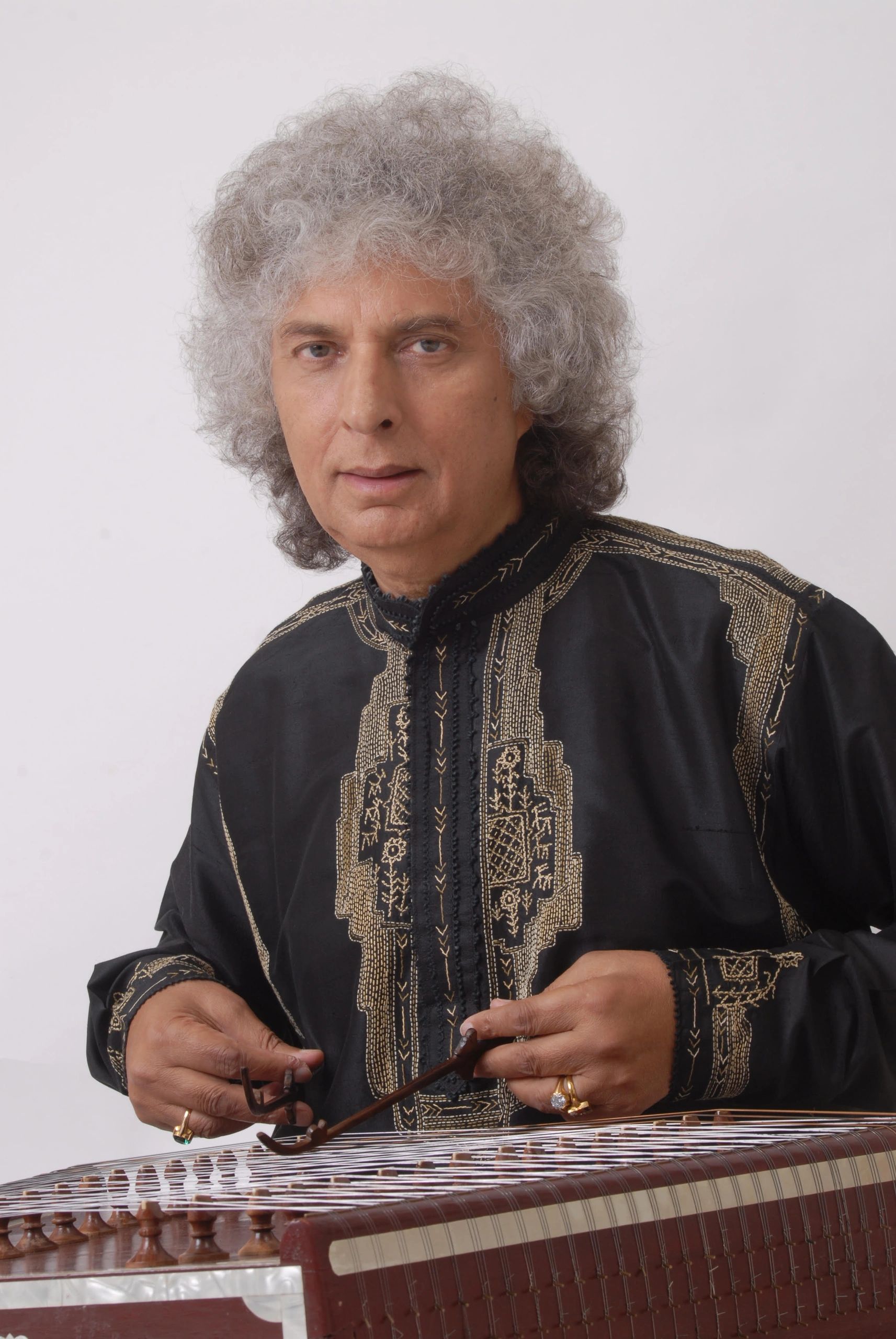
    When santoor maestro Pandit Shiv Kumar Sharma talked about his relationship with his son Rahul Sharma who is also an accomplished musician in his own right, it was a symphony of another kind.

    Parenting is perhaps one of the world’s toughest jobs. All parents no matter who they may be walk that tightrope walk to ensure that their children grow up to be balanced individuals who are able to achieve their goals in life. However, this balance is difficult to achieve for most parents. They are constantly plagued with questions of how much indulgence is too much, whether you should convince the profession of your choosing or let the child find his own path. Hence when Santoor maestro Pandit Shiv Kumar Sharma talked about his relationship with his son Rahul Sharma who is also an accomplished musician in his own right, at India Music Summit 2019, it was a symphony of another kind, the one, parents wish that some one could have helped them listen to. Here are some excepts:

    On choosing a path in life

    I think music or any talent is inherited from past life. More than the practice or hard work, it is the flair the child is born with which parents must recognise. When I embarked on this path, I had encountered a lot of difficulties because people were not very aware of Santoor at the time and I had to struggle to make a mark. So my wife said that we will not teach our children music or make them face these challenges. My elder son Rohit is not into music. But one day when I heard Rahul composing a Casio that I had bought for him from Japan, I knew he had the flair for music and I decided to teach him. So, if a child has the flair, the parents must recognize it and encourage the child.

    On father-son relationship vs guru-shishya relationship

    When I had started teaching Rahul, our father-son relationship had already been established. In a father-son relationship, the son can place a hand on the father’s shoulder but in a guru-shishya relationship, the formality and the sanctity of the relationship has to be observed. He would sometimes ask me why should I do this in this way only. This was in the beginning and I had to sort out the dynamics of the relationship and ensure that I play different roles at different times. Now it is well established that when I am teaching him, I am his guru and after than I am his father and he is my son. I think that is very important that we don’t mix up these roles in life. Only then the teaching-learning can happen.

    On experimenting with new options in life

    I believe one should not stop children from trying out new things in life. Many years ago, a saxophone player from Norway had contacted me. He wanted me to create a combination of Santoor and Saxophone which I did not think was a good idea at the time. However, when Rahul wanted to create the same combination with Kenny G, who is considered one of the world’s greatest saxophone players today, I never stopped him.

    On the constant learning from others

    My father always encouraged me to learn new aspects, new styles from people around me. I have seen gurus who tell their shishyas to not look at anything except what they are being taught by the guru. However, my father had a different perspective on this. He never stopped me from listening to music made by other people. He encouraged me to listen to all kinds of music. There is a saying in Panjabi ‘Sikhiya, Dekhiya, Parkhiya’ which means to learn the music from your guru, hear other people’s music and compare whatever you’ve learnt from others and your own learning. Then you must constantly keep innovating and improving your craft. When I was living in Jammu, I used to listen to the western classical music on the radio every night. So, I have not stopped my son from listening to any instrument or any kind of music because that I believe creates limits. A free musician can get ideas from anywhere and that is how Rahul has been able to grow as a musician.

    On the pressures faced by parents

    Pandit Shiv Kumar Sharma: The most important thing is the value system that you must establish as a parent in the first few years of life. If your values are right, then the children will learn the right thing. Moreover, you must have the confidence in your child that he will be able to perform whether on stage or life.

    Shailaza Singh

    Published Author, Poet and Youtuber 

    This article appeared in Rashtradoot Newspaper’s Arbit section on 6 October 2019.

  • The Enigmatic Storyteller- Guneet Monga

    The Enigmatic Storyteller- Guneet Monga

     Guneet Monga’s journey to success is nothing short of phenomenal. She is one of the youngest producers in India and a trailblazer who believes in the power of story telling. Her movies have won accolades around the world. The Hollywood Reporter named her as the “most prolific producers of a new wave of cinema”.

    ‘When the going gets tough, the tough get going.’ I hadn’t understood the true meaning of this adage until I talked to thirty-five year old Guneet Monga, an Oscar winner, a BAFTA nominee whose boutique production house Sikhya Entertainment has produced notable movies like The Lunchbox, Gangs of Wasseypur, Masaan. Her 2018 production Period. End of Sentence won the Academy Award for Best Documentary Short Subject. However, the road to these achievements hasn’t been easy for this former Delhite who has worked as a DJ, insurance agent, an event planner, a salesperson for Laughing Cow Cheese in her quest to seek her true calling.

    Some excerpts from the conversation:

    You’ve been into so many jobs. What made you turn a producer?

    I am a story teller by heart. Even if I have to explain a small incident, I will take 15 minutes to talk about it. Producing is a very powerful form of story telling. I also get to empower so many directors to produce great content. I am a multi-tasker who is wired for delegation and organization, so becoming a producer was a natural progression of sorts since I started as a production intern and then moved on to become a location manager and so on.

    Adversity seems to have been a part of your life. In your childhood, you’ve seen domestic violence. You struggled to return the 50 lakhs to your neighbour after your first film tanked. How do you find the strength to move on?

    From the very beginning, I have been a go-getter. I don’t think much, I just dive into the work and do what needs to be done. Choice is a privilege and when you don’t have a choice you just need to move on. When my first movie tanked, I went from school to school, location to location to showcase the movie which helped me to pay it back.

    Life has this way of resetting our value systems by constantly giving us something different from what we expect, believe or want? Has it ever happened with you?

    All the time! I lost my parents about 10 years ago. And I am an only child. You always look back at your parents for your core value system and to understand where you come from, what you were taught to believe in. Today, though I have achieved a lot but I miss that kind of appreciation from the core. So, everything that happens is good but not great because that sense of validation which comes from your parents is not there. So, I have learnt to become my own parent. I have set my value system with my own checks and balances to check my self and understand where I could be better. Whenever something good happens, I tell myself this is just the start, there is so much to do, so much to learn. But that is a lot of internal work.

    What does success mean to you?

    I am actually a big believer in power of failure because that teaches you the most. When you achieve success in anything, you don’t think things could go wrong. To me, the movies that have not worked, the movies that have not been released, are the reasons why I am able to be a part of a movie that is successful around the world and wins awards because I learnt so much from the movies that didn’t make it. To me success is this wisdom, and to be inspired and to be continually allowed to be tell my stories. For this I have learnt to be grateful and content.

    What is the biggest strength of a woman according to you?

    Women are generally very perceptive, empathetic and have a great sense of intuition and responsibility which allows them to be in a better position than men. Besides, there are women like me who lost so much in life that they have nothing to lose and are grateful for opportunities that they get. So that fearlessness is also a very powerful tool as a woman.

    Have you been to Jaipur?

    Yes, I was their for the Jaipur Literature Festival this year. I love Jaipur and its people. The place has amazing energy. I am a silver jewelry collector so Jaipur is a great shopping destination for me!

    Shailaza Singh

    Published Author, Poet and Youtuber

    This article was published in Rashtradoot Newspaper’s Arbit section on October 11, 2019

  • The lost treasure

    The lost treasure

     The partition was not an easy affair for anyone. People were killed, murdered and those who survived and crossed over were constantly haunted by the memories of the home and the people they had left behind.

    My great grandfather’s stories of partition exodus had always fascinated us. The lazy Sunday afternoons were spent sprawled near his armchair listening to the stories with open-mouthed fascination while he reminisced about the painful affair. He poignantly described those agonized moments when he had to say goodbye to some of his childhood friends.

    During partition, my great grandfather who was known as Brigadier Khem Singh was serving in the Bikaner State Army. He was stationed in Churu district in Rajasthan and it was his job to ensure a smooth transit for those who were setting out for a new life in India’s new neighbor.

    ‘But, why didn’t you hide them grandpa? You could have hidden them or may be some of your friends somewhere and they could have continued living here.’

    ‘Don’t be silly. They were all my friends and I couldn’t have hidden some and let some go. It would have been unfair.’

    ‘So didn’t you call them up or write to them or something?’

    ‘How could I write to them ? It wasn’t like an army posting. They didn’t know where they were going to be, so there was no address to write to. We also didn’t have any phones at the time.’

    He told us about how he could never bring himself to revisit their abandoned mansions because he knew he would experience nothing but their pain and loneliness.

    ‘When I was a boy, we all used to play together. Manu Khan, Sugandi and many others. It was sad to see to them go. We spent days playing and running around in those mansions and suddenly they were either deserted or someone else came to live in them.’

    He barely talked about anything else but the heartrending tales that were an inseparable part of the whole affair. Once or twice he mentioned how people told him about the treasure that they had buried in the sand so that they or their children could come and claim it once the political environment improved.

    However, as children, we were more interested in the treasures left behind by those who were leaving their ancestral homes and going towards an unknown future. We often made him repeat the parts where people buried their treasure in the desert sands and told him to keep a watch on it till they came back for their precious heirlooms.

    ‘But Grandpa, what was in the treasure and why did they bury it?’ we would constantly ask.

    ‘Oh, nothing much, just some gold bricks and jewelry which they could not carry. They buried it because the riots had started and news had spread of people killing each other ‘, he would reply.

    ‘Did you see them?’ How big were the bricks?’

    ‘No, they just told me that they had buried the treasure near this sand dune or that tree and I just told them not to worry.’

    ‘So you never actually saw it?’

    ‘No, I didn’t. I couldn’t have gone and seen everything. Many people had buried their treasure in the desert . I was taking care of lakhs of people. I couldn’t have seen everything.’

    ‘But then they wanted you to look after their treasure, that’s why they told you, didn’t they?

    ‘No, they just told me because they wanted to tell someone they trusted. The treasure was buried in the desert and the desert would look after it.’

    ‘How would the desert look after it?’

    ‘The desert is wise. It hides many secrets in its depths and reveals only those which need to be revealed.’

    ‘So, where is it now?’

    ‘I don’t know, probably somewhere in the desert. ‘

    ‘Did anyone come to claim their treasure?’

    ‘No, I hoped they would come so that we could meet and talk. But no one ever came back.’

    ‘But had they come back, would they be able to find their treasure?’

    ‘Probably not. The dunes keep shifting.’

    We would don our thinking caps, just like our favorite detective Sherlock Holmes and try to pin point the exact location of the buried treasure on a small map of Rajasthan. For us that treasure represented the proverbial pot of gold at the end of the rainbow, which would end all our problems and help us to live life king-size. We would analyze every word uttered by grandpa and try to deduce the exact bearings but the exercise was usually a frustrating one and we would end up more confused than ever. We tried to ask the others members of the family, who would shake their heads and tell us to ask grandpa.

    ‘Please tell us grandpa where exactly was the treasure buried?’

    ‘Which treasure?’

    ‘The one you were talking about. The gold bricks and the jewelry left by your friends.’

    ‘I told you I don’t know. They buried it in the desert and that’s all I know.’

    ‘Grandpa, we can look for it and probably we can find it. We can even give it back to them.’

    ‘You children are crazy. I don’t know where it is and I cannot tell you anything else. Now go and let me sleep.’

    We, the children would try our best to cajole him to tell us about the location of the treasure but to no avail. My grandfather was never interested in money or the luxuries that came with it. He believed that money was just needed to feed the family and ensure that they could live a decent life. The trappings of the rich were not his idea of a good life. For him, his treasures were his friends and the time he spent with them and no amount of gold bricks could bring that back.

    Shailaza Singh

    Published Author, Poet and Youtuber

    This article was published in Rahstradoot’s Arbit Section in September 2015

  • A dance of faith, culture and Gauri

    A dance of faith, culture and Gauri

    Gauri or Gavri dance as it is popularly known is a forty-day festival observed by the tribal communities of Mewar where men dress up as various characters including women to appease the Gods. 

    I entered the non-descript room which was located in a corner of the Maharaja Sawai Man Singh (MSMS) II Museum in the City Palace. I saw about fifty men and women sitting in the room. I also saw two foreign looking men (who I later discovered were the American photographer Waswo X. Waswo and Giles Tilloston, consultant director, research exhibitions, MSMSII Museum) and a Sonika Soni, a art historian sitting in the front of the room. The topic of discussion was Waswo X. Waswo’s recently released book ‘Gauri Dancers’ by Mapin Publishing while a slide show which displayed some pages of book played in the back ground. Waswo has been living in Udaipur in Rajasthan for the past twelve years where he collaborates with the local artists to create sepia-coloured pictures along with the photo-hand colourist Rajesh Soni.

    Waswo talked about how he was introduced to the style of Gauri when he was clicking a picture of a Gauri dancer in 2010 as a part of a regular series. However, it was only in 2011 when he encountered a man selling Gauri masks that he decided to create a book by using the dancers as models and creating appropriate back drops for them. In fact, this book is the only English-language book on the tradition which features the portraits of performers.

    I looked at the crowd. Some were busy chatting on their phones while the others were listening to the conversation. I was wondering about what was so interesting about a bunch of sepia-toned, hand-coloured photographs when Waswo started talking about the Gauri or Gavri, the forty-day festival which is celebrated by tribal communities of Mewar, in southern Rajasthan. The celebrations commence on the next day of Rakshabandhan, a period which is interestingly known as the most inauspicious period according to the Hindu calendar because it is believed that the Gods go to sleep after Raksha Bandhan and no auspicious activities including marriages are held during this period. During the forty days, the men from the Bheel, Gameti and Meena communities observe strict fasting and do not eat in the night. They abstain from non-vegetarian food, alcohol and walk barefoot and sleep on the floor. The predominant belief behind this entire ritual is that if they worship Lord Shiva and his wife Goddess Parvati by observing these austerities, then the gods will bless them with ample rain during the rowing season and an abundant crop.

    The interesting aspect according to the historian Sonika Soni was that no women take part in these celebrations. Women are an important part of the audience and the welcome group as the performers travel from village to village during these forty days. The performers generally choose the villages where their daughters have been wed and the villagers from these villages host these performers. In these performances, many performers play multiple characters and keep improvising and changing their costume depending on the act. The stories are based on Shiva, his wives Mohini and Parvati and Bhasmasur, the demon. They wear makeshift and locally improvised costumes. Only one character called Rai Bhudiya wears a mask who acts as Shiva and Bhasmasur. The wives of Shiva are Mohini and Parvati. Sonika Soni recounted how men and women from the village seek blessings from the performers as they believe that the performers imbibe the gods during this period.

    Waswo narrated an anecdote where he had invited the performers to his make-shift studio in outskirts of Udaipur and told them that he wanted to photograph them in their costume. The performers were so enamoured by the idea that they kept coming back for photographs even when they did a minor change to their costume for the upcoming act. He also talked about a photograph which had several children posing together as ‘monkeys’. He said that the children of the tribal community just stay keep watching the performance and do the odd jobs for the performers. According to him, nothing has ever been documented in this age-old tradition and everything including the acts, stories is word of mouth which has been passed on from generation to generation.

    Sonika Soni said that in the recent years, the NGOs from various parts of Rajasthan have started taking an interest in this festival and may be the government will also start doing something for these artists who are endeavouring to preserve an age-old custom. However Waswo had a different take on this and said that as of now the tribal community and the festival has been thriving with the support of the local villages. He said that the intervention from the local authorities should not take away the spirit of the festival and transform it into just a day-long affair for the amusement of the tourists, something like what happened to the Kathakali, the famous dance from Kerala.

    For me the photographs from the book were just the icing on the cake. The real deal was the Gauri dance and the dancers who have been keeping this folk tradition alive without any incentive except their faith in their Gods. In a non-descript room of the museum in the City Palace I had a rendezvous with the living and breathing history of Rajasthan, something that has not been relegated to commercial performances, at least not yet.

    Shailaza Singh’s article on Gauri Dancers was published in Rashtradoot’s Arbit on November 2, 2019.

  • Palace of Clouds: Not a fairytale

    Palace of Clouds: Not a fairytale

    Palace of Clouds

    Author: Rajshree Kumari, Bikaner

    Publisher: Bloomsbury

    Pages: 400

    Book Type: A Memoir

    Rating: 4.5/5

    Rajshree Kumari’s book Palace of Clouds offers the reader an interesting and engaging narrative of her experiences in life. 

    The common folk like us are often made to believe that the life of royal families often resemble fairytales. They are more or less the privileged souls who live high above the earth, in the clouds where no worries and problems that plague the common man can even touch them.

    However when I read ‘Palace of Clouds’, a book authored by Rajashree Kumari, the erstwhile princess of Bikaner I realized that life had its own challenges even for the favourite child of Dr. Karni Singh, the erstwhile Maharaja of Bikaner.

    The first few pages of the book feature in-depth reviews about the book. The writers include well-known authors like Amrita Gandhi, who is also a television anchor, Aman Nath who is also a hotelier and Dharmendra Kanwar, Dr. Amin Jaffer, who is also a senior curator of Fine art at the Al Thani Collection and Christie’s, London.

    The author begins with an in-depth description about the history and origin of Bikaner. This is followed by chapters about her family lineage. Though these pages give interesting insights into the lives and times of the royal family of Bikaner and many a times, the author has been able to weave the historical events seamlessly into her narrative, to people who already know about the history of Bikaner, they feel like pages from a history book. Nevertheless, they should be an interesting read for the uninitiated and those who are unacquainted with the rich legacy of Rajasthan.

    The chapters along with the photographs that detail the life of the author are full of anecdotes that give an insight into her growing up years, her fears and her personality. Whether it is about the origin of her childhood fear of abandonment by her parents or about losing her father, or her relationship with her husband, the author has been completely candid about her life experiences. I was taken aback by the innate honesty with which she talks about the strained relationship between her mother and her paternal grandmother or her efforts to learn cooking before her marriage or the breakdown of her marriage.

    Though the narrative about her life style and travels to different countries did give me an impression of a life swathed in luxury without a dearth of money or the abundant resources that the common people find hard to fathom, her accounts of her travels to various countries are interesting. Many mothers would identify with her story about how she struggled to find Bournvita in Saudi Arabia for her son who refused to drink milk otherwise.

    The book is punctuated with several interesting stories like how the Hinduja brothers clearly monopolized the then British prime minister Margaret Thatcher or the unexpected proposal of marriage by an Egyptian policeman. The author also gives a detailed account about her passion and relationship with her pugs which partly inspired her foray into PETA (People for Ethical Treatment of Animals) along with her father’s efforts as a Lok Sabha member for creating awareness about the plight of bull frogs which were exported to countries like France for their legs which were considered a delicacy. The pictures are interesting

    I discovered an interesting aspect about the author who has been a shooting champion and the youngest recipient of the Arjuna award. In her memoir she talked about how her father was immensely proud of her achievements in shooting . However, she also talks about how her father’s pressure of expectations put her off painting for the rest of her life.

    When I finished reading this book in the wee hours of morning, I realized that life is the same for everyone whether a princess or a common man. The privileges or the luxury that comes with being born in a certain segment of the society does not protect us from the inevitable pain and trials that arise from the life events and experiences that become an integral part of our lives.

    To the casual reader, the title ‘Palace of Clouds’ may give an impression of a fairy tale life but it is anything but that. By author’s own admission, as a teenager and most Indian girls, she expected to have a life where her father would always be there for her and she would marry a Rajput man and live happily ever after. However, things turned out very different from not only what the author had expected but also from the point of view of a reader who was expecting to read about a rich princess but learnt about a lady who not only took the various tribulations of her life with grace but also became richer and wiser with those experiences.

    Shailaza Singh’s article was published in Rashtradoot Newspaper’s Arbit Section on 5 November 2019.

  • The Third Chukker Of Polo- Travel The World On A Horseback

    The Third Chukker Of Polo- Travel The World On A Horseback

    Polo has not only emerged as a great past time for the masses but also a great career option for those who love a fast life and fast horses.

    Picture this – You are wondering what to do with your children on a Sunday. The age-old options of movies or malls don’t appeal to you. You have played the tourist and explored all the forts and palaces Jaipur has to offer. What else can you do? Fortunately, you are in Jaipur at a time where polo matches are becoming the latest passion of the masses.

    ‘Jaipur has more than a century old history as far as Polo is concerned,’ says Digvijay Singh, secretary, Rajasthan Polo Club. ‘I have travelled across the world and the moment I say Jaipur, people say polo. In a way, Jaipur has become a Mecca of polo players today.’

    Polo has also undergone an evolution of sorts with the traditional polo being replaced by arena style polo which has three instead of the customary four players. ‘It is not always that huge grounds will be available for polo,’ says Jai Singh, the co-owner of the famous brand Polo Factory. ‘Moreover, if you realize that the maintenance of the grounds is very important because when the horses run, they dig up the ground with their hooves. So, after every match, the ground has to be leveled again which in itself is a marathon task.’

    Digvijay Singh agrees, ‘Besides being a very fast-paced game unlike cricket or other such sports, Polo is also a great employment generator. It requires grooms, stable hands, people who can level the field. Then there are tourists and players who come from all corners of the world to try their hand at polo which creates employment for people who are not even related to polo. New riding clubs have come up in Jaipur which teach riding to those who want to learn polo. Moreover, people of Rajasthan are very friendly with horses since centuries. This camaraderie is so inherent here that most of the helping hands including jockeys, stable boys in the Mumbai Turf Club are from Rajasthan. Some people from the Shekhawati region have migrated to Dubai and are now taking care of the horses that belong to sheikhs and racing clubs.’

    ‘Polo also has a lot of heritage attached to it,’ says Digvijay Singh. ‘His eyes have a far away look as he reminisces about a time when Gayatri Devi, the erstwhile Rajmata of Jaipur used to regularly come for Polo matches. ‘ She was herself a very good polo player. I remember she used to sit upstairs in the stands. She did not like to be disturbed while watching the match. It was because of her that we had to ensure that no children below the age of 12 years could come upstairs. So, her grandson Padmanabh Singh and other children of the royal household had to sit downstairs to watch the match. The rule is still in place today. The grounds parking used to be full of bicycles since the crowds used to love to watch the erstwhile Maharaja Sawai Man Singh II play the game.’

    So what does it take to be a polo player for a person who does not have a lot of money or belongs to royal family. Digvijay Singh says, ‘All it takes is sheer talent and determination. Today there are people like Abhimanyu Pathak, who despite having no royal background are top players of the game. This is one game where it doesn’t matter who you are and where do you come from. If you are good, you will soon be picked up by a team or will get a patron who will finance you. You can even learn playing polo by doing something called a working polo which is quite a norm in many countries.’

    So, as you watch the horses gallop across the field, you can always think of this alternate career option for your children. After all, this is one game where you can rub shoulders with the royalty and the richie rich, bump into celebrities who are polo aficionados and have a great life travelling around the world. All on a horse back! What do you say to that?

    If you are interested in watching a game of polo today, head to the Polofactory Yard at Dhankya to watch the Polofactory Amateur Cup The entry is free for all.

    Shailaza Singh’s article was published in Rashtradoot Newspaper’s Arbit Section on 17 November 2019.

  • Second Chukker – Women in Polo

    Second Chukker – Women in Polo

    Women are slowly and steadily foraying into polo.

    I was busy watching the men play Polo at the PoloFactory Amateur Cup when I saw a twenty-one-year-old girl cheering the players. She did not look like a mere spectator of the game. She was constantly shouting out advices to the players on the field.

    From our initial conversation, I got to know that her name is Rajvi Sen and she is a budding polo player. She is originally from Gujrat. She does belong to any royal family which is what intrigued me. I asked her about her foray into polo. She said, ‘Four years ago, I remember going to a club in Hyderabad and seeing a horse polo game and saying that I want to learn to ride and play this game. The game was fast and exhilarating which is what caught my interest. The game is not just about chasing a ball but also involves a lot of strategy. It’s something like a combination of chess and hockey on horse back.’

    So, how did she learn the game? ‘I learnt polo by doing what is known as working polo. In working polo, you pay half the price of the lessons and the stay since you work for the person hosting you. When I turned 18, I went to the South of France for two months. I was riding and I was also looking after the horses and playing. I was the first Indian girl to get a sponsorship this year from a company for the polo induction program in Spain. This involved a selection process too. Then I went to Prague again on a working polo. But this time I played a tournament which was really an exhibition match in Prague and was a captain of a team. Our opponents were from Hungary.’ I asked her about her mother’s reaction to her choice of sport. ‘My mother was initially very worried at first but now she is okay especially because she understands my passion for the game.’

    This made me curious about the status of women polo in India. I talked to Ankur Mishra, a polo player, editor, Jodhpur Polo Magazine, founder, Polo Day Out in Jodhpur. He said, ‘The girls are just beginning to play polo. Generally we believe that ladies are naturally more skilful and elegant riders as far as the horses are concerned. In fact, we have our annual Women Polo Tournament on the December 29 this year. However, this is more of a mixed match because in a team of four we have one man and three women. The reason is that we don’t find enough women polo players.’

    Mriganka Singh, an avid polo player and erstwhile princess of Jammu and Kashmir agrees. ‘Why would most people in India want their daughters to play such a dangerous sport when they can do something else or get married? I have a friend who used to play great polo but after becoming a lawyer has completely given it up. Yes, there are lot of opportunities in Jaipur for amateurs and low goal players, people who are just starting out. Arena polo is coming up in a big way because in this you need less players. However we need more women in Polo.’

    Mriganka was a part of the Indian team at the Special Women’s Polo Tournament which was held in Manipur in January this year. She said, ‘Polo abroad is so different. This year, women from Canada, Argentina, USA and Kenya participated in the Tournament. There were women of all ages from 14 to 40. I saw three pairs of mothers and daughters from Argentina playing and it was so beautiful. Why cannot we have that in India?’

    I asked Jai Singh, the owner of PoloFactory about this strange predicament of women’s polo in India. He replied with a very enigmatic smile, ‘Yes, just like the Amateur’s Cup, we are working on something that will help the new women players of polo to practice and ace the game. But you will have to wait for a formal announcement and it will be very soon.’

    There seems to be a new vibe in the air with women raring to make it big in a game like Polo. The question is are there enough women to make Polo a passion amongst the masses? Only time will tell.

    Catch the excitement of Polo matches at Polofactory Amateur Cup at the Polofactory Yard, Dhankya. The matches are on till November 17.

    Shailaza Singh’s article was published in in Rashtradoot Newspaper’s Arbit Section on November 13, 2019

  • A new chukker @PoloFactory

    A new chukker @PoloFactory

    Name the game which is played on horse back and the goal posts are changed every time a player scores a goal? Name the game which was once played only by royalty but now is slowly becoming a passion with the masses? Yes, you’ve guessed it right! It is Polo, the game of the fast and the furious which is played on horseback. 

    For Jai Singh and Vikramaditya Singh, the owners of Polo Factory, the brand that manufactures polo equipment, polo is not just a game but a way of life for the players and the people associated with them. Explains Jai, ‘There are four players in a team. Each polo player has to have at least five to six ponies. Each of these horses needs a groom which means a lot of employment since these horses need all the infrastructure like stables etc.’

    So, does this imply that people who can afford to buy and maintain these horses can only play the game? ‘Not in this day and age,’ says Jai. ‘Some players come from the 61st Cavalry, which is known for producing well known polo players like Colonel Kuldeep Gurcha. Now new players who are talented but do not have the resources often find patrons, people who are passionate about the game and have the horses. A good example is Abhimanyu Pathak, one of India’s top players who started out as a call center executive and supported his dream for playing polo by learning horse riding.’

    So, where do these players get the horses from? Jai says, ‘Some of the horses come with the players of the 61st Cavalary of the Indian Army, while others are retired race horses. Then there are organizations like Polo Clubs and individuals who import horses from countries like Argentina, England, New Zealand which are the hub of international polo.’

    So, where all in India is polo played? Jai says, ‘It was once played in Kolkata but now that circuit is inactive. Besides Jaipur, which has 13 big polo grounds, and is a favorite hub for the polo lovers, Mumbai, Delhi and Bengaluru circuits are also active.’

    We talked and watched the players like Padmanabh Singh, the erstwhile maharaja of Jaipur, Sidhanth Singh battle it out along with their teams in the first match of the Amateur Cup, which is being organized by Polofactory. In this tournament, there are two pools A and B. Each pool comprises of three teams. Chandna Group, Kanota and RRPC form the pool A while Bikaner Polo, PoloFactory, Polo Inn and Suites form the pool B.

    Jai beckoned a photographer who was busy shooting the players. He told me that the photographer R K Singh is perhaps the only one who has been exclusively shooting polo matches all over India for the last 25 years. When I quizzed him on his passion to capture polo, he said, ‘I love action and in polo matches there are no retake. So, I like the thrill of capturing the moment.’

    Rajvi Shailender Singh, a well-known player believes that Jaipur has the best crowd when it comes to polo because the polo matches that are organized in Jaipur are always open for the public as compared to Delhi where one needs passes to watch a polo match. ‘Most people who come to watch the game know the rules, the fouls and the players. There are some veterans in the crowds who even know the name of the horses.’

    Polo comes with its own share of interesting and amusing incidents for its players. Rajvi Shailendra Singh narrates an interesting incident, ‘In 2000, when I was playing a game in Delhi, my horse froze in the middle of a game. I tried to make it move but to now avail. I looked up and saw the entire team coming towards me on their horses. They were so involved in the game that even though I shouted and told them to watch out, no body paid any attention. So, finally, I had no option but to jump off my horse and run to save my life. The moment I jumped off, the horse sprang into action and ran off in the opposite direction. Now the incident sounds funny but that time it was the scariest moment of my life.’

    Jay concludes, ‘Polo is a sport that is a combination of skill, speed and agility. Now with the young blood coming in it has become even more attractive for people who love to ride horses and play this fast and furious game.’

    The Polofactory Amateur Cup is being played at the Polofactory Yard, Dhankya in Jaipur till November 17, 2019. The entry is free for all. The first match of today will be played between Kanota/RRPC and Benaz Corp. In the second match, Polo Inn and Suites will battle it out with Bikaner Polo.

    Shailaza Singh’s article was published in Rashtradoot Newspaper’s Arbit Section on November 13, 2019

  • A tryst with multi-tasking creativity @ IIT- Jodhpur

    A tryst with multi-tasking creativity @ IIT- Jodhpur

     A peak into the world of IIT, Jodhpur is not just about endless studying but also pursuing and developing passions for a lifetime.

    The very mention of the word IIT (Indian Institute of Technology) conjures up different scenes from Aamir Khan’s movie ‘Three Idiots’ . For most people, IIT is a stressful place where students are kept constantly on their tenterhooks or are incessantly cramming from their text books for an upcoming exam or practical. That is the impression I had before I visited IIT, Jodhpur fondly known as IIT-J.

    I had been invited by the students of IIT- J to participate in a panel discussion about paid news, which was just one of the events which was organized as a part of Aaftaab, a two-day literature festival. The other events included a kavi sammelan where famous poets like Sampat Saral, , a book launch by Arpit Vageria, creative writing workshop by Ishita Dey and a performance by the band Exile Diaries and much more. Nivedit Jain, who had initially contacted regarding my participation in the event told me that he could only speak to me in evenings since he and his classmates were busy attending lectures and lab sessions in the day. When I inquired, he told me that their lectures sometimes continue even till 8 or 9 in the evening.

    When I reached on the first day, I saw many students attending these lectures. There were some who were busy making notes in the library. In my experience, literature or all such festivals in colleges meant that the academics were brought to a standstill. However, this was not the case here.

    Shubham Pandey, a faculty of chemistry in IIT-J said, ‘We always encourage the students to pursue their passion while studying. We tell them to take up at least one additional activity like singing, writing, film making which helps to take off the pressure of the studies. In these festivals, the students not only manage the festival but also continue their day-to-day studies because we believe students or anyone for that matter can develop multi-tasking as an ability.’

    Parichay Batra, who is a part of the department of humanities and social sciences and teaches film making in IIT-J opined, ‘Every student is required to select at least four humanities subjects from a long list of electives every year. Some students choose film making, others choose newly introduced subjects like digital humanities or digital publishing or social connect as their electives. ‘

    I wondered why was it important for a student to choose these additional humanities subjects when he was already grappling with his regular subjects in the institute. Parichay Batra said, ‘You have to understand that preparing for IIT entrance examination is no mean feat. The students forgo all their hobbies and passions for a year or two just to ace this examination and get into IIT. Now, when they come here, it is important for us to help them rediscover their passion along with their regular curriculum so that their creativity is not lost in all this pressure. Hence, we have a very active student gymkhana which has different societies like the literary society or photography society or the cultural society and many more which help students to focus on their passion. In fact, there have been some students who discovered their passion for film making after taking an elective film making course in IIT. They then completed their four-year B.Tech course and cleared the entrance exam for FTII (Film and Television Institute of India) to become film makers. ’

    I saw the students enjoying all the events in the literature festival with fervor. They cheered in the Kavi Sammelan and participated in the discussion and also sang with the band.

    As I bid adieu to the students of IIT, Jodhpur, a thought came to my mind. Perhaps if director Rajkumar Hirani was to remake ‘3 Idiots’ again today, his protagonist Farhan Qureshi played by R. Madhavan would not have had to drop out of IIT to pursue his passion for photography on the behest of Aamir Khan’s Rancho.

    Shailaza Singh’s article was published in Rashtradoot Newspaper’s Arbit Section on November 17, 2019