There is a lot going on in the world. Especially in Afghanistan. Men, women and children making a desperate bid to flee from a land which has been conquered by terror again. There are no rights of anyone in that land. Only handful of people with guns wield the power of life and death over millions. They are living in a world where the basic right to survive peacefully is threatened.
Their trials and tribulations cannot be discounted. No one should be in that situation ever. But when I think of it, I remember all those people who keep talking about what is wrong with India as a country. Debates, strikes, issues and what not. I wonder what they feel about the situation in Afganistan. I don’t know about them but to an extent I am grateful that I live in a country which is not at war with itself.
I know there are problems, violence, catastrophes and lots of issues but at least in most parts, our day or night does not end or begin with the sound of gunfire or other weapons and dread in our hearts.
Yes, women face discrimination and many other problems but in most parts they can strive and struggle for a better life without having to fear for their very life. They don’t have to cover their faces in terror in most places nor do they have to give up their dreams.
Being an army kid, I have experienced the dread that fills your heart whenever you hear news of some upheaval in the area where your parent is. Trust me, living in that dread is not easy. Not hearing from your loved ones for days on end is not easy. And it is also not easy to live in an area where sometimes even the closing of a door sounds like a gunshot.
There is a difference between peace and uneasy peace. Uneasy peace does not last long. And peace cannot happen with violence.
So, all I am really saying is that we as the citizens of this country should be grateful for a lot that has been bestowed on us…and living peacefully tops that list.
Ever since I was a little girl, Diwali has been one of my favourite festivals. I never liked the crackers and the bombs but I loved lighting the little diyas. Every Diwali, parents bought those small earthen lamps along with a big earthen lamp. They were then put in a tub full of water. After some time, they were taken out and put in the sun. Once they dried up, we kept them aside. Towards the evening, we children arranged them in a big plate and put a wick in each of them and poured oil in each of those little lamps. Then, we went on the terrace with those lamps.
We used to keep the plate with the lamps on the ground. We lit the big lamp first. Then we used to place three or four small lamps next to the big lamp and soon those lamps were lit. We then would arrange the four lamps in such a way that each of those lamps could light three other lamps.
Some how the act of lighting those lamps made me feel as if there was a glow deep within my own heart. Their quiet, flickering flame silently braved all the breeze that is generally a characteristic feature of the moonless night. If a lamp flickered too much, sheltering it with the hand was enough to console the tiny light.
Though these days, all kinds of lights are used in Diwali, lighting the small earthen lamp and gazing into its flickering light is still something I look forward to. It makes me believe that as long as we have this tiny flickering light of hope deep within our hearts, nothing will be impossible for us even on a moonless, windy night!
The stars in the sky also look like little lamps to me. I once read that when we look at the stars in the sky, we are actually looking back in time for the light of these stars takes millions of years to reach us. By the time, the light reaches us and we see the star, it is probably long gone!
Today, I wish a very happy Diwali to all of you who are travelling on this path of light, love, hope, togetherness. Whether or not we meet, I pray that your life is as warm as the little lamps that brighten up our Diwali and long lasting as the stars, whose light continues to guide us long after they are gone!
The setting is idyllic, surrounded by picturesque mountains on all sides. The area is known for its scenic beauty, fertile soil and delicious fruit. But today, the villages of Uttarakhand are reeling under mountains of waste says Ashish Mukherjee.
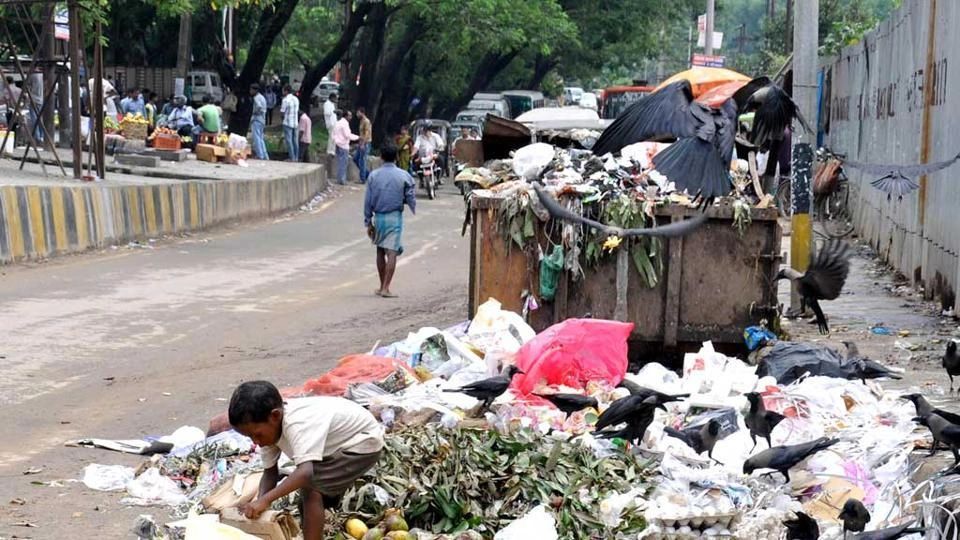
I am writing this article on a Sunday evening sitting in my house in Meora village in the Reetha cluster of villages in Nainital district of Uttarakhand. The air outside is heavy with acrid smelling smoke. Plastic, food wrappers and almost all kinds of inorganic waste are burned routinely here.
Uttarakhand has always been a vacationer’s delight. Lakes, hills, lush green forests, abundant fruits make this state an ideal spot for tourists. Pilgrims routinely visit the many holy sites in this state. More than 3.6 crore tourists visited Uttarakhand in 2018 and the numbers have been increasing every year.
Garbage collection and disposal has become a burning issue in Uttarakhand. Though places like Nainital have well-maintained garbage collection and disposal systems, there are many off-beat locations which have now become hotspots for tourists who are constantly looking to explore uncharted terrain which is away from the hustle and bustle of places like Nainital and Almora. Most tourists come laden with food packets and plastic water bottles which are dumped either on the to the resort or in the bins in provided in the resort. However, the resorts do not have any way to dispose off the garbage left behind by their guests.
The interesting thing is that the consumption patterns of these tourists have also influenced the local consumption patterns, thus generating more waste. Further, even local produce is sold or exchanged in polythene bags amongst the villagers. Generally the nearest garbage dump is an hour’s drive from these villages which is why the waste is either burnt or thrown into the forest or water bodies. All these methods increase the all ready existing pollution.
Conversations with multiple villagers reveals their helplessness in the matter. Most of them are not aware of the hazards associated with burning waste. They typically burn waste once a week and feel that burning waste in small batches may not impact their health greatly. Further, there is a lack of awareness of environmental impact of throwing non biodegradable wastes into the forest. They are candid in admitting their helplessness as civic officials are absent from the villages and there is no process for waste collection.
Dangerous Side-effects
The burning of plastic is particularly dangerous as it gives rise to dioxin (a class of Chlorine compounds) which are toxic. Chlorine toxicity can lead to pulmonary oedema and consequent heart problems. This is a trend which is already visible in some parts of Uttarakhand. Furthermore, such air pollution has resulted in climate change, as seen by the rising temperature of Almora over the years. Dumping of waste into the forest can affect creatures who may eat it or contaminate the soil with micro-plastic or other hazardous material present in the contents.
Way Forward
The way forward for Uttarakhand, particularly the rural belt is not just to sensitize citizens to practice the 3 Rs – Reduce, Reuse and Recycle but also provide the necessary infrastructure and services for citizens. The following measures would go a long way in addressing the environmental problems arising out of accumulation of solid waste –
Compulsory composting
Compulsory composting of organic waste like fruit and vegetable peels, cuttings for resorts would go a long way in reducing the load of waste generated by resorts in tourist season.
Promote eco-friendly packaging material
A strict ban on plastic bags while promoting bags made of alternate material like jute or wicker which are both durable yet not ecologically damaging can counter be an effective counter to the volume of plastic waste generated.
Also, incentivizing local manufacturers of food products to use eco-friendly packaging instead of multi-layered packaging would be a great step forward in curtailing the menace of waste generated by food and beverage wrappings.
Solid Waste Management
Despite the above measures, there would be significant volume of solid waste generated which includes food wrappers of popular commercial food products. The critical step for effective solid waste management is waste segregation and collection. Specific kinds of waste like PET bottles can be sent for recycling.
Since Uttarakhand is a mountainous state with most of the land being either agricultural or forest land, land-filling may pose a challenge and waste-to-energy plants may effectively treat non-recyclable waste and help to meet the growing energy demands of the state as well.
As I sit here thinking about how to address this problem, I wonder about what our government is doing to curtail these mountains of waste. The swacch Bharat abhiyan will hardly be successful if we are left grappling with these piles of non-degradable wastes in one of the most beautiful states in India
The following article of Hindustan Times of March 2018 states that Uttarakhand generates more than 1400 tonne of solid waste daily, most of which goes untreated –
A mother is not born, a mother is made. Some people equate a mother to a God. I some how disagree. As film maker Gulzar puts it very succinctly, ‘Mothers or parents for that matter are as old as their children. If a child is two years of age, a mother is also two years of age because that is the time she has spent in learning how to be a mother.’
Sometimes, I wonder how is it that some parents are able to accomplish this Herculean task so easily. As a single mother, I am constantly on a balancing act where I keep falling, failing and sometimes succeeding in my effort to get it right.
Let me be very honest here. Teaching my daughter about protecting the environment has not been an easy task. Not when life has become so use-and-throw friendly. We’ve got disposable toys, disposable utensils, disposable clothes and even disposable electronics. So, telling a child to not use disposables amidst this hullabaloo is like trying to record a new song on a tape recorder which is playing its own song.
When I resolved to teach my child about being conscious about the environment, I realized a simple fact. Children today don’t do what you say, they do what you do. So, I decided that in order to teach this life-long lesson to my child, I had to first understand and imbibe those teachings in my own self.
As a single mother, its not easy. Buying a plastic Bisleri bottle is easy every time I felt thirsty. Carrying a water bottle of your own is not tough but during the course of the last six months, I have forgotten three bottles in three different places and never found them again.
When I was a little girl, there were small water huts called piyau here in Rajasthan. People used to sit in those huts. If one felt thirsty, all one had to do was to cup the palms against the spout through which the person sitting inside would pour water from an earthern pot. Now, we don’t see those anymore.
Some steps like carrying a jute bag in my purse for impromptu shopping are easy.
We have a small rooftop kitchen garden where we grow some vegetables. Getting my daughter to eat a brinjal curry made from the brinjals from the garden is a trifle tough but when she does eat the curry, she wonders why does it taste so good. When she goes to our village in Rajasthan, she loves eating the food because it tastes so good. No special spices, no masalas but the food tastes more organic than the best of the organic brands.
However, fighting the lure of Cup-o-noodles and the ever-available Maggi noddles is not easy. But then who said food was easy? There are times, these junk foods become an paradox of sorts, especially when the children enact a play about eating healthy food in the annual school function and then straight after the show pester parents to buy burgers from the school cafeteria.
As a convenience oriented society, we still have a long way to go. Though people like Greta Thunberg talk about climate change, it is us mothers who have to wrestle with this ever-confusing world which are full of paradoxes where children are constantly lured by advertisements for fast foods, fast gadgets, fast toys and then lectured about environmental change by grim faced teachers.
I only have one question here- As a society,when will we be able to practice what we preach especially in the arena of demand and supply? Why cannot the teachers really tell children about being happy with what they have? Why cannot the multi-nationals focus more on sustainable products rather than always launching new products?
We teach our children about protecting the environment but when they grow up, they still have the same choices, they still follow the road more traveled. Why?









You must be logged in to post a comment.